

Hamilton Hotel: An Iconic Landmark for More Than 150 Years

Since the arrival of the early European settlers in Brisbane, Hamilton and its environs have always been regarded as a highly desirable area to reside. One local landmark that has stood the test of time for over 150 years is Hamilton Hotel, a place that history also credits for giving the suburb its name.

Early Beginnings

Gustav Hamilton, a prominent solicitor from Toowoomba, opened the Hamilton Hotel in 1865 for horse racing patrons. Gustav, a prominent landowner in the Eagle Farm district, built the hotel which still stands on the same site today.

Located at the corner of Kingsford Smith Drive (formerly Hamilton Road) and Racecourse Road, the hotel first catered to horse-drawn wagons travelling from Breakfast Creek. Because of its strategic location, the hotel was part of a major travel route in Brisbane. 

Hamilton Hotel, Hamilton Reach, Racecourse Road
The white building is possibly the Hamilton Hotel on the corner of Racecourse road.
Photo Credit: Lost Brisbane/Facebook

Hamilton Hotel was a large wooden structure, similar to a huge homestead, set by the banks of the Brisbane River.

Frequent guests fondly referred to the hotel as “The Hamilton,” which became the main reference point of the district, especially since there were not a lot of busy and prominent establishments in the area. It wasn’t long until “Hamilton” came to informally refer to the entire area, not just the hotel.

Wealthy Enclave. Destination Location.

It was Hamilton Hotel that launched the suburb as a destination location as its patronage increased and the suburb’s residents grew. The hotel promoted the scenic surrounds of the locale and provided the community and guests with both convenience and socio-cultural enrichment. 


From the 1860s to the 1880s, the suburb of Hamilton also became known as the “gentlemen’s estates” as settlers built their large villas and mansions here, spurring a boom for the residential sector.

Even then, the subdivision allotments that went up for sale in Hamilton were priced two or three times more than the blocks in nearby suburbs, such as Mitchelton.
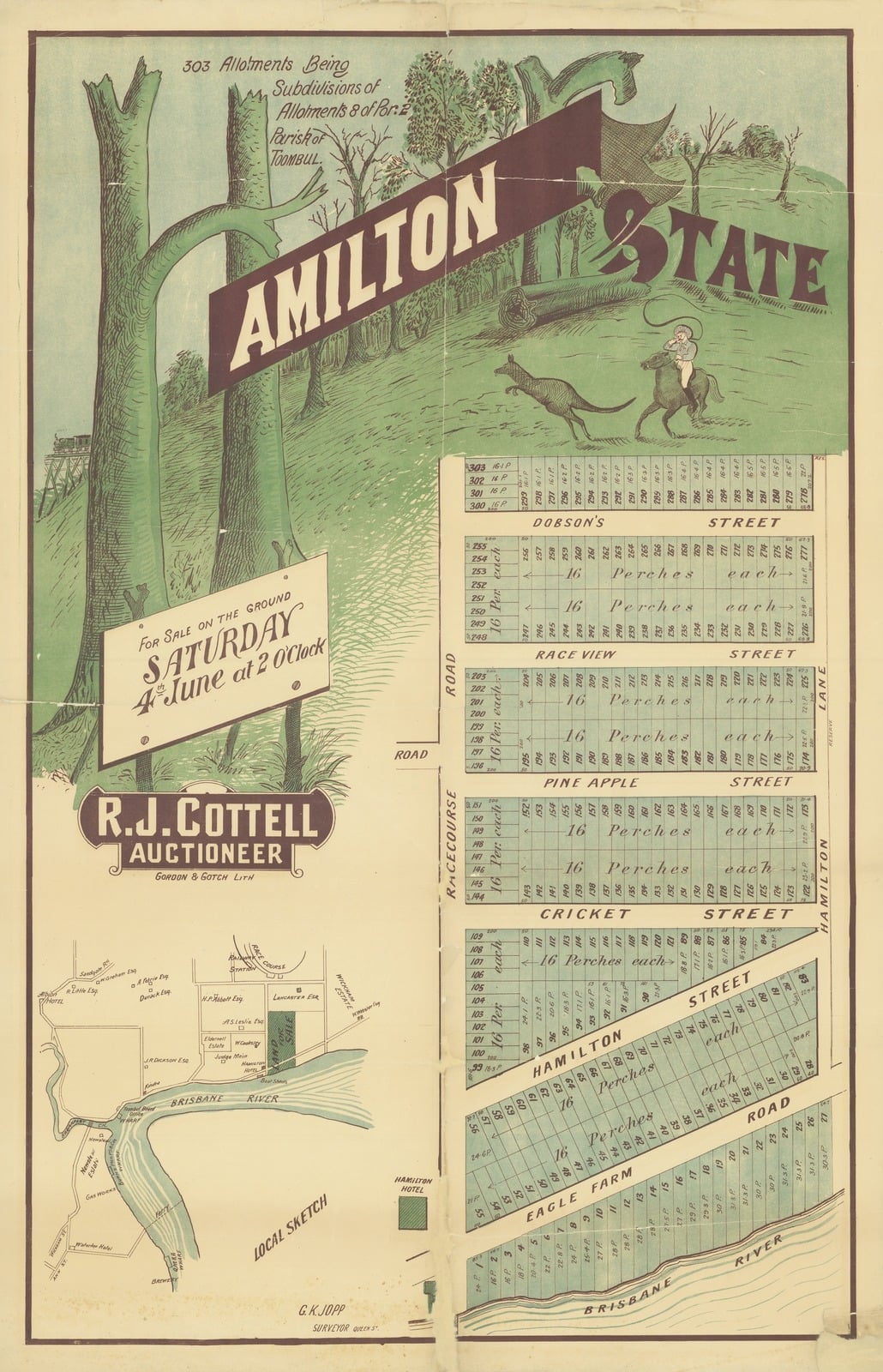
Hamilton subdivision allotments
Photo Credit: Lost Brisbane/Facebook

Hamilton attracted old wealth and everyone regarded the suburb as an ideal place to live because of its premier location. The elevated lands gave residents a sweeping view of the beautiful river scenery, the central business district, and the surrounding suburbs. 
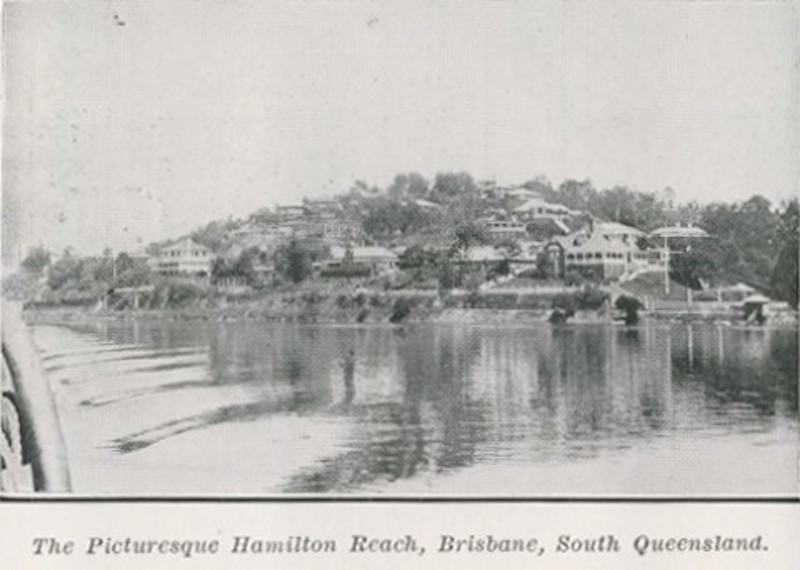
View of reach
Photo Credit: Queensland Places

When Gustav retired to Toowoomba, he sold Hamilton Hotel to Sam Hamilton who made the most out of the famous family name and sustained the venue’s popularity.

In 1904, Hamilton was officially recognised as a town and the owners of Hamilton Hotel changed hands a number of times. Among its previous operators were J.R. Ahern and his wife, and E.J. Stewart of the Stewart Hotels.

Modern Transformation

By the 1960s, then-owner Castlemaine Perkins Ltd completely rebuilt the hotel as a modern two-storey brick building, with a concreted car parking facility that could accommodate more than 200 cars. The hotel also had a bar and lounge that could accommodate hundreds of guests at a time. 

Tom Wilson, the managing director of Castlemaine Perkins Ltd, planned the rebuild of the hotel carefully into two sections to improve the efficiency of the hotel’s operations.

The new Hamilton Hotel introduced an unusual ventilating system that eliminated cigarette smoke indoors. Its design also took advantage of the natural light for the public bar facing Kingsford Smith Drive, whilst a private bar for 200 guests fronted Racecourse Road.
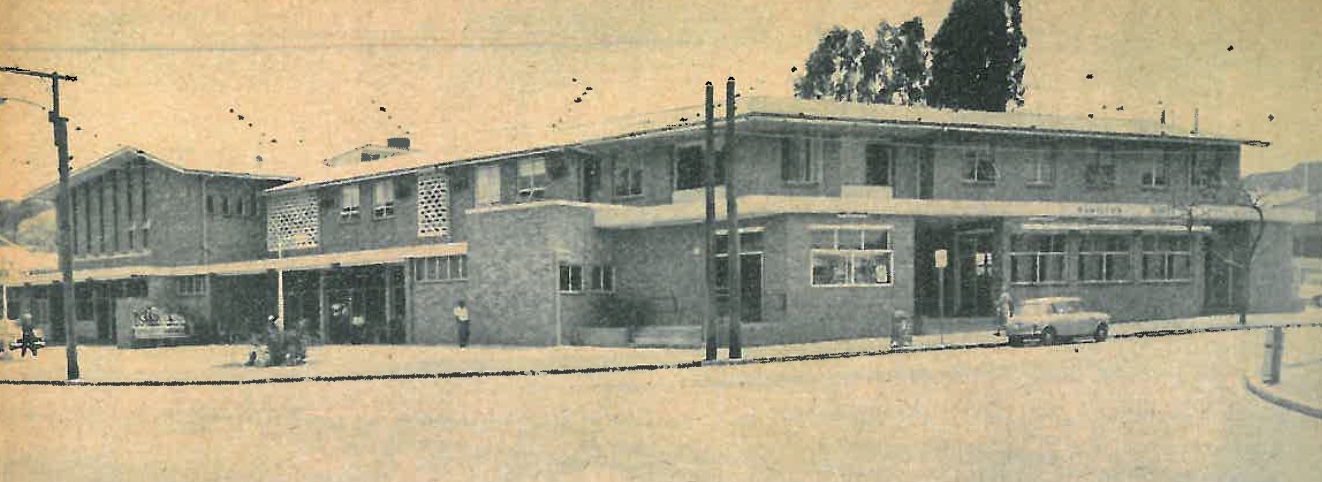
Hamilton Hotel, 1960s rebuild.
Photo Credit: Hamilton Hotel 

Hamilton Hotel became known as luxury accommodation with an upstairs and downstairs dining room, as well as a food dispensary that provided guests with choices of quick snacks and a wide-ranging menu that could satisfy the most discerning taste.

Eight cold rooms were built at the back and three rooms with walls that can be dismantled were added for other uses. This made it easier for the hotel staff to serve bar guests refreshing drinks and good food.

All the self-contained rooms on the second floor had their own toilet and bath, Hallstrom refrigerator, television, and telephone. There was also a built-in table in each room so that traveling businessmen can make their quarters their temporary office.

In the 1970s, another renovation added venues like the Pioneer Grill Room, the Tally Ho Bar, and the River Rooms fine dining area to the hotel, allowing it to accommodate more events such as business seminars, birthday parties, and wedding celebrations.

Hamilton Hotel Today

The ALH Group, under Bruce Mathieson, took ownership of the hotel as its expanded its business in Queensland in 2000.  In 2015, Hamilton Hotel commemorated its 150th birthday and has remained a popular and trendy social venue for both locals and tourists. 


Today, Hamilton Hotel is pegged to benefit from the upcoming multi-stage development of Northshore Hamilton, the massive event space and recreational centre, prior to the 2023 Brisbane Olympics. Stage 1 of this development is underway.

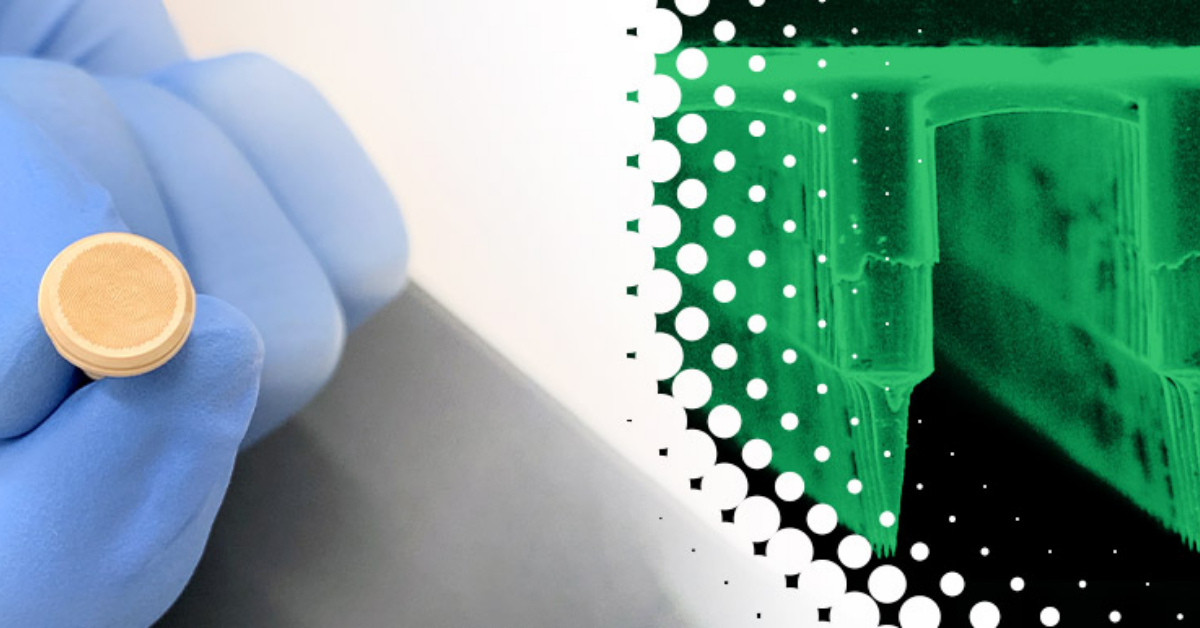
Hamilton Could Soon Be Producing Needle-Free Vaccines

Construction is already underway for Australia’s first needle-free vaccine manufacturing facility, located in Northshore Hamilton.

An existing warehouse is being refurbished and transformed into this state-of-the-art, biomedical manufacturing facility. The construction phase has already generated 80 jobs for the local job market.

Once up, the facility will also generate employment opportunities for highly-skilled biomedical experts. Employment projections are estimated to be up to 110 in 2023 and could grow to more than 139 additional jobs over five years.


The project by Queensland biotechnology company Vaxxas is supported by the Economic Recovery Plan of the State Government.

Deputy Premier and Minister for State Development Steven Miles said that once delivered in early 2023 and operating at full capacity, the manufacturing facility is expected to produce needle-free vaccine kits that can deliver around 300 million doses annually.

Video credit:  Vaxxas – R&D Tax Incentive customer story | BusinessGovAu / YouTube

Vaxxas plans to deliver an influenza vaccine for its first project using the new technology. They will also look for opportunities to improve existing vaccines, including the ones used to fight COVID-19, in a bid to strengthen preparedness and response to future pandemics.

How does needle-free vaccine technology work?

Vaxxas Chief Operations and Development Officer Angus Forster said that through high-density microarray patch (HD-MAP) technology, a vaccine can be administered and deposited through the surface of the skin in a matter of seconds.

Photo credit: VAXXAS 2021 / vaxxas.com

These small patches are armed with thousands of micro-projections that carry the vaccine components and deliver them directly below the skin’s surface where plenty of immune cells reside, triggering a more efficient immune response. This technology also allows the patches to be stored at a temperature as high as 40 degrees making it less difficult to distribute the vaccines to rural and remote areas.

Photo credit: VAXXAS 2021 / vaxxas.com

Mr Miles further noted that the needle-free vaccine technology offers a fast and easy deployment of vaccines adding that supporting local biomedical companies is beneficial for Queensland and the rest of the world.


“That’s why Economic Development Queensland worked with Vaxxas to progress design and approvals for the facility, helping to grow the state’s economy,” he said.

Northshore Hamilton Prepares to Transform for the 2032 Brisbane Olympics

In a multi-stage development, a section of Northshore Hamilton could first be used as an events space for concerts, a circus space, or a recreational centre before its final transformation into the Games Athletics Village for the 2023 Brisbane Olympics.


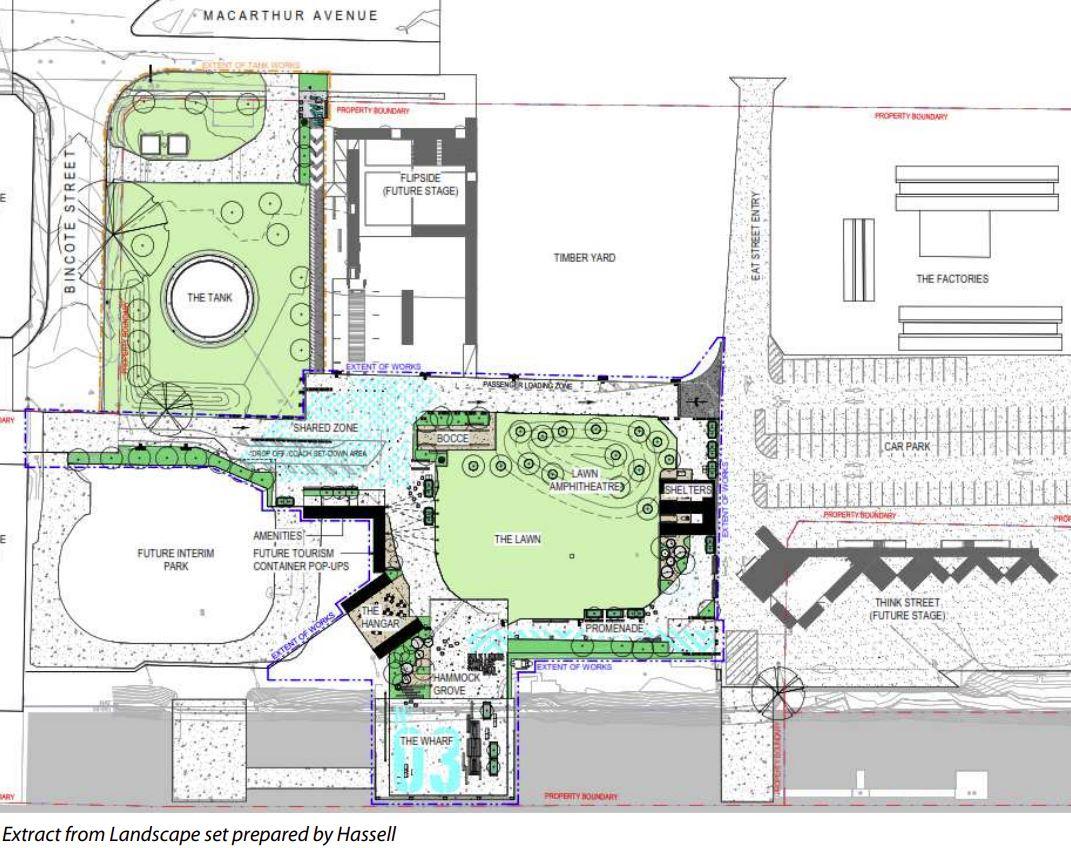
A development application (DEV2021/1200) submitted to the State Development, Infrastructure, Local Government and Planning is seeking approval to use parts of Northshore Hamilton for different activities for at least six years or until the Olympic Village opens. 

Existing buildings in this section could be refurbished and repurposed to accommodate a cinema or drive-in theatre, a party venue for birthdays and weddings, or a flea market that could be held regularly.

The site might also be used for trade shows and exhibits, food or wine festivals, and an assortment of training or workshops. Updates and improvements to the public realms will include landscaping, lighting, and pedestrian access.

Photo Credit: State Development, Infrastructure, Local Government and Planning

Currently, Stage 1 of the Northshore Hamilton Development Scheme, covering 304 hectares of land between Kingsford Smith Drive and the Brisbane River, is underway.

“The proposal in no way seeks to compromise the development of the site in line with the ultimate intent of the Development Scheme, but rather seeks to activate – through the use of public spaces and repurposing of existing buildings – the waterfront at Northshore with the anticipation that community goodwill will build, prospective investors will gain confidence, and vibrant people places will result,” the developers stated. 


Meanwhile, the Games Athletics Village is expected to house more than 10,000 athletes and officials during the 2023 Brisbane Olympics. After the games, facilities in Northshore Hamilton will be offered as a residential site, an aged care facility, a social housing, or a build-to-rent market.

Northshore Hamilton to Transform into Athlete’s Village for 2032 Brisbane Olympics

There’s still a decade to go before the 2032 Brisbane Olympics and Paralympic Games, but there are already big plans to make the city Olympic-ready. One of them is to revamp Northshore Hamilton into an Athlete’s Village. 


Read: Hamilton Northshore Seen as Ideal Site For Olympics Athletes’ Village


Deputy Premier and State Development Minister Steven Miles compared Northshore Hamilton’s future transformation to South Bank when Brisbane hosted the World Expo 88. It was a temporary event but it changed Brisbane forever. It transformed the South Bank from ‘provincial backwater into a world city.’ 

“Village construction will crystalise the area’s long-term plan and rejuvenate the existing industrial land,” Mr Miles said.

Northshore’s prime waterfront location and its proximity to the CBD, competition and training venues, and transport connections makes it an ideal location to host thousands of athletes by 2032.

Mr Miles said the already popular precinct, which is home to landmarks such as Portside, Eat Street Markets, and Alcyone Hotel will be given a boost once the Athlete’s Village is constructed.

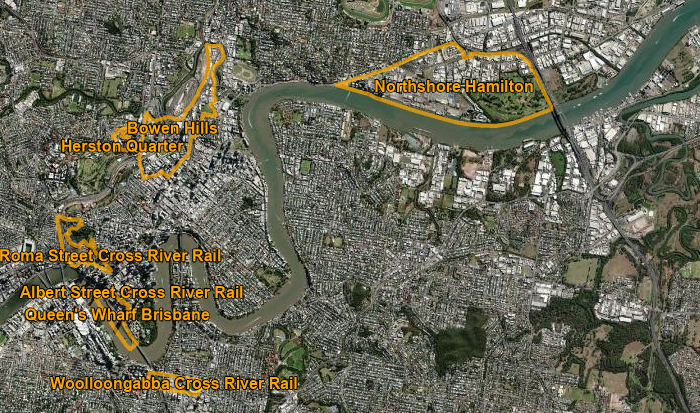
Northshore Hamilton PDA boundary map (Photo credit: www.statedevelopment.qld.gov.au/

Situated on a Economic Development Queensland-owned land within the Northshore Hamilton Priority Development Area (PDA), the Athlete’s Village will serve as temporary home for more than 10,000 athletes and team officials during the Olympic Games and more than 5,000 for the Paralympics. 

“Among the key requirements when hosting the Olympics is provision of athletes accommodation and I’m proud Northshore has been locked-in for the Brisbane Olympic and Paralympic Athletes’ Village,” Mr Miles said.

Mr Miles said hosting the 2032 Games will mean a 10-year pipeline of construction jobs, trade and investment opportunities, and legacy projects that will benefit Queenslanders for decades to come.

“The legacy of the Village precinct is already incredibly important,” he added.

Following the games, there are plans to use the village for residential offering, including aged care, retirement living, social and affordable housing, key worker, hotel, build-to-rent and market accommodation.

Hercules Street Park Now Open After Multi-million Dollar Upgrade

The Hercules Street Park (Hamilton Recreation Reserve) has been reopened following the completion of its $10-million upgrade works.

The park upgrade project is part of the Northshore Hamilton urban renewal, which will see the  304-hectare industrial area transformed into a 2.5km riverside precinct over the next 20 years.

“Since Northshore Hamilton was declared a PDA in 2008, the landscape of the industrial and port precinct has changed dramatically,” Minister for State Development Cameron Dick said.

Funding for the Hercules Street Park upgrade project was made possible through contributions from developers in the Northshore Hamilton PDA. The upgrade works took under 12 months to complete. 

The new Hercules Street Park features 16,000 new plants; a playground and water play facility; a “pup-graded” dog off-leash park; a multicourt play area and exercise; and a barbeque and seating areas.

Mr Dick added that the playground features a multi-level industrial themed container play structure with a four-metre-high tube-slide and a traditional swing. The smart water play area, he said, utilises water captured and stored in tanks, and features a “synchronised programs and lighting at night to create a family-friendly space.”

Northshore Hamilton is Queensland’s largest waterfront urban renewal project with the State Government’s property development and community-shaping agency, Economic Development Queensland (EDQ), having already invested a total of $77 million in infrastructure to date.

The private sector, meanwhile, has invested approximately $1 billion across 3,000 residences, 20,000sqm of retail, and 22,000sqm of commercial space.

“Over the last ten years development in the $5 billion mix-use precinct has seen the delivery of high-quality housing at Portside Wharf and Hamilton Reach; two CityCat terminals and the Eat Street Markets that attract over 1 million visitors per annum.

“Disused industrial places and spaces have been replaced with The Deck, Factories Precinct, Incubation Zones, EV charging stations and Tennis Australia courts.

“Some of the best international and national institutional developers have played a significant role in Northshore’s transformation, including Frasers Property, Brookfield, Shayher Group, Alceon and Devine.

“Locals, visitors, residents, workers and families can continue to enjoy the fruits of their efforts at Brisbane’s newest park in this revitalised precinct,” Mr Dick concluded.


SpeedyCat to Start Services from Northshore Hamilton, New Sports-Themed CityCat Launched

The new SpeedyCat is all set to start services on Monday 24 September 2018 to cut travel times from Northshore Hamilton to Riverside and from the University of Queensland to North Quay. The announcement comes as Brisbane City Council launched a new sports-themed CityCat.

Public and Active Transport Chairman Cr Adrian Schrinner said more than 100 weekly SpeedyCat express services will operate during peak hours on weekdays.

SpeedyCat Brisbane
Photo credit: Luke Hauck (WT-shared) Anewcleardawn/Wikimedia Commons

“The express services will also service terminals at Apollo Road in Bulimba, Teneriffe, Guyatt Park in St Lucia and West End, to boost travel options for residents so they can spend less time travelling and more time at home with family and friends,” Cr Schrinner said.

“The completion of river works for the Kingsford Smith Drive upgrade now means we can roll out new SpeedyCat services, however this new timetable will also incorporate changes to other river transport services, including CityCats, CityFerries, CityHoppers and Cross River Ferries.

The same number of CityCat services will remain. However, passengers can expect a go-slow section of the river during construction of the Queen’s Wharf Brisbane.


Read: New Express SpeedyCat to Service Northshore Hamilton Through $68 Million Investment


Notices and information will be provided at terminals to inform passengers of any changes due to the ferry services.

TransLink, for its part, has updated the timetables. Commuters can head over to their website to plan their journeys.

CityCat for Athletes with Intellectual Impairments

In anticipation for the upcoming International Federation for Athletes with Intellectual Impairments (INAS) Global Games in Brisbane next year, a CityCat will carry the colours of the INAS.

INAS Brisbane 2019This is in line with the celebration of Australia’s first INAS Global Games, recognised as the biggest sporting event for athletes with an intellectual impairment.

Cr Schrinner said the INAS games will strengthen Brisbane’s reputation as an inclusive city.

“With only one year to go, we are today unveiling Brisbane’s 18th sports-themed CityCat that will proudly display the colours of the INAS Global Games, coming to our city in October 2019,” CR Schrinner said.

Robyn Smith, CEO of the Global Games Sports Company, is delighted to hear about the CityCat branding with INAS colours.

“It will not only promote this inclusive event to the Brisbane community, but showcase the world’s best athletes who will compete and demonstrate that their impairment is no barrier to sporting excellence,” said Ms Smith.

The games are expected to attract more than 1,000 athletes from other parts of the world.

New Express SpeedyCat to Service Northshore Hamilton Through $68 Million Investment

Brisbane City Council’s $68 million investment promises to shorten travel time along the Brisbane River as new express SpeedyCat services will be deployed between Northshore Hamilton and University of Queensland.

Brisbane’s river transport network has been servicing more than five million passengers every year. According to Lord Mayor Graham Quirk, the new express SpeedyCat services will significantly improve public transport services for commuters on the water.

“CityCats are icons of our New World City and Council will introduce around 100 new express ‘SpeedyCat’ services per week from September, that will travel from the University of Queensland and Northshore Hamilton, into the city,” Cr Quirk said.

Photo credit: Twitter/Team Quirk

“These new express services will operate during weekday peak periods, saving river commuters up to 24 minutes between Northshore Hamilton and Riverside, while passengers will be able to travel between the University of Queensland and North Quay in as little as 16 minutes,” he added.

The Council Annual Plan and Budget 2018-19 also includes a $4.5-million funding to deliver a larger, new generation CityCat. This will be added to the current 21 vessel fleet servicing 25 terminals across a 22-kilometre stretch of the Brisbane River.

The new CityCat is set to hit the water in 2019.

The 2018-19 Budget also has allocations for ferry terminal upgrades.

Photo credit: Twitter/Team Quirk

“A further $19.3 million will be dedicated towards upgrading ferry terminals across the city, including a major overhaul of the Guyatt Park ferry terminal at St Lucia, with construction starting in the coming year,” Cr Quirk said.

“The upgrade will include replacing the existing pontoon with a new flood-resilient terminal that will be easily accessible for all ages and abilities,” he added.

Improvements to Brisbane’s river transport network follows Cr Quirk’s promise for new CityCat services in the 2016 elections. Although it took two years for the Council’s promise to be delivered, commuters will be able to take advantage of the shortened travel time starting in September.

Northshore Hamilton Cited as an Ideal Location for the Proposed Brisbane Seafood Market

The government is ready to support a proposal to have a major seafood market in Brisbane to boost tourism. While there is no definite site for the project yet, Northshore Hamilton is one of the suggested sites for the development.

John O’Sullivan, Managing Director of Tourism Australia, proposed the project, believing that a Brisbane seafood market  will help attract more Asian visitors to the area.

Photo credit: CCO Public Domain / PublicDomainPictures / Pixabay

Minister for Innovation and Tourism Industry Development Kate Jones agreed to the proposition as the Asian market is a major growth driver to Queensland’s tourism industry.

The Asian Market and Queensland’s Tourism

Queensland’s tourism industry achieved a record high growth in visitations as more than 500,000 Chinese people visited the state in 2017. The results of the latest International Visitor Survey (IVS) by Tourism Research Australia shows that 2.7 million overnight visitors contributed $5.3 billion to Queensland’s economy in 2017.

China and Japan have been Queensland’s largest and most valuable international markets with expenditures of $1.14 billion and $432.1 million, respectively. The government continues to seek more ways to attract the Asian market to promote Queensland’s tourism.

According to Ms Jones, the international tourism market remains to be competitive and it’s important to rise to the challenge by improving Queensland’s tourism offering. A major seafood market in Brisbane can be the best project that would further boost the tourism industry.

Photo credit: www.northshorebrisbane.com.au

Targeted Sites

Northshore Hamilton’s ideal location, being close to the water and accessible via the Gateway and Kingsford Smith Drive, makes it a great site for the proposed seafood market.

Other areas being considered for the project are Bulimba, the City Centre, Howard Smith Wharves, Newstead, and South Brisbane.