


Portside Wharf IGA to Go Upmarket With Its Planned Expansion

Portside Wharf IGA will undergo a major expansion to target high-end customers with construction expected to commence in April 2022 and be completed mid-year.


The IGA Portside expansion comes as Portside Wharf is getting another high-rise residential tower. The project will expand the store’s footprint by 30 per cent to 1,036sqm enabling it to cater to the growing demand as the Hamilton area continues to score new high-end developments.

Once completed the expanded store will feature levelled-up offerings with a renewed focus on takeaway treats, grab-and-go food and health and well being including expanded meat, produce and delicatessen goods offerings; cheese bar; health food section and premium pet foods section for designer pets of well-off Portside residents.

There will also be a new in-house cafe, to be called “The Street Café” that will offer freshly baked items including muffins and croissants.

The expansion will add to the current offerings in the precinct which is home to more than 35 retailers ranging from fine and casual dining to boutique fashion and health and beauty. Current tenancies at the Portside Wharf include Dendy Cinemas, Sono Japanese Restaurant, Belvedere Bar N’ Grill, Subway, Urbbana and Studio Pilates.

Brothers Robin and Ramsay Zeneldin, who established Portside Wharf IGA in 2014, think that now is the time to expand given the incoming developments at Portside Wharf and the store’s continued growth in the past years. 


Brookfield Residential Properties is proposing another residential development at Portside East,  near the new Brisbane 2032 Olympic Games athletes village. Known as “Building 19”, the development will be a 16-storey residents tower which will contain 186 apartment units and three retail tenancies at the ground level.

Brookfield is also set to build its 1,000th apartment at Northshore Hamilton after its proposed $141-million, 19-level residential tower secured the greenlight. They recently completed Buildings 16A and 16B Gallery House and its 17 Rivello development began construction in October 2021.

From the 1800s to 2022: Revisiting Major Floods in Hamilton and Other Brisbane Suburbs

The Brisbane River catchment carries over 40 per cent of the run-off from the Moreton Bay region and flood mitigation efforts remain a primary concern. Over the centuries, climatic and environmental changes have had catastrophic consequences to the river flow, impacting Brisbane’s suburbs, including Hamilton. 

The 2022 Flood

In February 2022, the Brisbane River breached its banks and reclaimed its floodplain, peaking at 3.9 metres, inundating roads, buildings and structures in what will go down in Brisbane’s watery history as another significant instance of flooding.

More than 15,000 homes have been flooded whilst 54,000 households had no power. Though this was lower than the 4.46 metres experienced during the 2011 flooding, more suburbs experienced the worst flooding. 

Photo Credit: Trucking Crane Trucks/Facebook

Schools and roads were closed while a stay-home order was issued whilst damage assessment took place. Disaster assistance and recovery programs were also set in place to help the flood victims. 

Photo Credit: Chris Croft/Facebook

Here’s a round-up of the worst Brisbane River floods that have affected Hamilton and the suburbs around what we know today as Brisbane.

March 1864 

The 1864 flood was accompanied by a gale of wind so violent, it destroyed even the best-protected houses. Umbrellas were useless outdoors because of the wind. Sections near the Brisbane river had more than six inches of rain until the water began to rise, leaving many residents stranded. Some locals were able to abandon their house before it went underwater. 

March 1870

Low-lying areas on the stretch of Eagle Farm to Breakfast Creek were covered in several inches of water due to great rains. All creeks in the district had been flooded and roads disappeared as the river swelled. 


February 1893

Photo Credit: Queensland Government

Disastrous floods rising to 23 feet and nine inches submerged houses and establishments near the Brisbane River. Victoria bridge in the north was completely destroyed.

Hamilton Brisbane Flood 1893
Photo Credit: State Library of Queensland

This was the most severe flood ever experienced thus far with three floodings occurring within days of each other, putting Brisbane at a standstill. 

Photo Credit: State Library of Queensland

March 1908

Excessive rains for four days suspended traffic and damaged crops. Half of Pinkeba was underwater for days as well, spilling over to nearby sites like Hamilton. But while the water prevailed, it did not reach as high as the previous floods. 

February 1931

Brisbane had its first disastrous flood after 23 years. More than a thousand homes in the Breakfast Creek area were submerged. City wharves were underwater as well as the water reached South Brisbane. Serious damages were noted in Milton, Oxley, Rocklea, Fairfield, and Sherwood districts. 


March 1955

The floodwaters were highest since February 1931, resulting in flooding in Brisbane’s lower catchment. River debris flowed through the towns in great quantities. 

January 1974

Photo Credit: Queensland Government

In the 1974 flood, the Brisbane River was at its highest level since the flooding in 1893. More than 8,000 homes were destroyed.

Hamilton Brisbane Flood 1974
Photo Credit: State Library of Queensland

Businesses suffered many losses, which were estimated to be at $68 million by the Insurance Council of Australia. 

Hamilton Brisbane Flood 1974
Photo Credit: Lost Brisbane/Facebook

January 2011

Extreme flash floods brought on major flooding in Brisbane, affecting more than 200,000 people, killing 33, and leaving estimated damage of $1 billion. This was the largest flood height produced since 1974, with the Brisbane River experiencing seven major flood peaks. 

Hamilton Brisbane Flood 2011
Photo Credit: Norris Chau/Facebook
Hamilton Brisbane Flood 2011
Photo Credit: Sue Mansfield/Facebook

After 2011, property values of suburbs across Brisbane fell between 6.1 to 18 per cent. Despite the recent floods, property experts are confident that house prices will recover quickly and riverside locations like Hamilton will continue to attract demand. 

Place of the Water Rat

Historically, the Turrbal people have experienced numerous instances of flooding in this river that they refer to as called ‘Maiwar.’ They also referred to the south end of the peninsula as ‘Kurilpa’ or ‘place of the water rat.’

Despite the destruction brought about by the periodic flooding, the wetlands and creeks leading to and around the Brisbane River also gave rise to fertile land around them, providing food and sustenance to the local Jagara and Turrbal tribes for centuries.

Today, despite the watery history, these areas are among the most highly sought after, with its river views and prime locations for houses in desirable suburbs like Hamilton, Ascot, Clayfield, Bulimba, Kangaroo Point, Teneriffe, and others.

How Northshore Hamilton Evolved from 19th-Century Fishing Ground to Premier Waterfront Precinct

Some of the best places in the world stand out because it’s ever-evolving to keep pace with the needs of their inhabitants and Northshore Hamilton exemplifies this evolution very well.  

Northshore Hamilton is currently a premier mixed-use urban renewal precinct with a first-rate waterfront neighbourhood.

Centuries ago, this site was the fishing and camping ground of the First Nations people given its location near the mouth of the river and proximity to Breakfast Creek, with its abundance of fish and wildlife. 

A decade from now, it will become the site of the Athlete’s Village for the 2032 Brisbane Olympic and Paralympic Games. 

The Busy Camping Ground of Yerrol

The First Nations called Northshore “Yerrol,” which refers to strong vines used as ropes. In the 1830s, Northshore was already a busy area as the site was a dense riverine rainforest pocket, offering different food sources for both humans and animals. Historians said that the First Nations people often caught large quantities of fish from this area to supply Brisbane’s fishing trade from the 1830s to the 1860s.


The Northshore-Breakfast Creek site was once a large Aboriginal campsite with different groups settling down to hunt and interact with other groups. This was the home to thousands, especially during hunting season.

After the 1860s, horse-drawn wagons filled the streets, establishing a travel route between Hamilton Hotel to Breakfast Creek. In fact, Hamilton was one of the first places in Queensland to have its own horse trams. 

Yet moving by water was still the quickest way for the Aboriginal people with Northshore as an important crossing point. Access to waterways was located at the area where Brett’s Wharf stands, a corner between Bulimba and Newstead, and a section in the east that has the Gateway Bridge today. These access points had shallow water, making it easier to wade across destinations.

Camping grounds in Hamilton Reach
Photo Credit: Northshore Brisbane

Following the colonisation and settlement, the First Nations people continued to camp in Northshore until the end of the 19th century when their populations were routed out of urban centres. Not far from their camps on Kingsford Smith Drive were several institutions that took in the Aboriginal people. By 1910, the campgrounds disappeared in Northshore. 

The Progressive Northshore Port

In the 1870s, the Hamilton Wharf (Portside Wharf) was a growing shipping area and served as the landing site for ferries connecting to Bulimba. As activities in the wharf increased with the development of several estates in Hamilton and Ascot, chief engineer of Harbours and Marine, Ernest Alexander Cullen planned to improve and expand the port with the construction of training walls and more dredging. His idea gave birth to Northshore. 

Ships docking at Northshore Hamilton
Photo Credit: Lost Brisbane/Facebook

Mr Cullen also urged the government to capitalise on Northshore for its industrial future. For the next 20 years, active development of the precinct continued. After the First World War, the government built the Cold Stores Wharf for exporting products like butter and cheese to Britain. This ushered the progress of Northshore as the vital export centre of Queensland. 

Brett's Wharf construction
Photo Credit: Wikimedia Commons

In the late 1920s, plans to build Brett’s Wharf were laid out by E A Cullen for commercial shipping. During the Second World War, this area was commissioned by the Allied Forces to stage and load military equipment. Millions were spent to add more facilities as Hamilton became the chief base for naval repairs. The Northshore Port developed rapidly during this period.

Naval ship leaving Northshore Hamilton
Photo Credit: Queensland Maritime Museum/Facebook

After the war, Northshore remained the hive of activities for shipping industries exporting wheat, sugar, and livestock to other countries, especially in war-torn areas of Britain. By the 1970s, the Port of Brisbane Strategic Plan was established to erect a new container port for more commercial endeavours.

Northshore Hamilton: Ambitious Urban Renewal

After Brett’s Wharf was closed to commercial shipping in the early 1990s, Northshore’s urban renewal was hatched. The focus of the redevelopment was to turn the precinct into a mixed-use public site with high-rise units, restaurants, retail outlets, supermarkets, cinema, and a public plaza. 


In 2007, the State Government approved the Urban Development Authority Act to tackle housing issues. This served as the catalyst for what Northshore Hamilton provides today. 

More than 64 hectares of land in Northshore were set for infrastructure projects that delivered a residential and commercial precinct with new parks and cycleways. The old ports and wharves were also repurposed into riverfront public sites like Eat Street Northshore. 

Northshore Hamilton urban development plans
Photo Credit: Queensland Government
Northshore Hamilton present-day
Photo Credit: Northshore Brisbane

In the next 10 years, Northshore Hamilton through Economic Development Queensland will see through the development of training venues that will host more than 15,000 world-class athletes for the 2032 Brisbane Olympics. After this monumental event, Northshore Hamilton has been earmarked for more residential accommodation, aged care facilities, and hotels. 

Two Citycat Vessels Damaged, Services Could Remain Inactive for Weeks

Ferry terminals remain closed due to raised river levels, debris and extensive damages sustained by some of the terminals and vessels. In the past few days, a CityCat vessel broke away from Hamilton North Shore terminal whilst another sank after being hit by a houseboat.


Lord Mayor Adrian Schrinner recently announced that the Bureau of Meteorology – Queensland has confirmed that Brisbane’s six-day rainfall total to Monday, 28 February of 792.8mm was the largest ever recorded for the city. The rainfall amount broke the 1974 record of 655.8mm. As a result, floodings have washed up pontoons, boats and marine buoys, massively impacting CityCats and ferry services across the city. 

There has been extensive damage reported across the terminal network which could mean that the CityCat network could remain suspended for several weeks. Most vessels are reported to be safe but damage assessments would still be taken once it’s safe to do so. 

Two CityCats (Kuluwin & Beenung-Urrung) were damaged by the debris flowing down the river. 

On Monday, “Beenung-Urung” was seen still afloat despite being hit by a houseboat, which caused a large hole on one of its sides, before smashing into the Addison Quays at Bulimba. Tilting on its side and taking on water, the vessel sadly sank the next morning.

“Very sadly, last night CityCat Beenung-Urrung sunk in about 8m of water off Addison Quays in Bulimba. On Monday she was struck by a houseboat and loosed from her mooring,” said Councillor Murphy.

“Overnight she continued to take on water and sank at approximately 3 am. A very sad day for Transport for Brisbane and the team at River City Ferries.”

“Kuluwin”, on the other hand, was hit by a concrete pier, sending it down the river and away from Northshore Hamilton ferry terminal where it was moored, before colliding with a container ship. The vessel is now tied up at the International Cruise Terminal after it was rescued and dragged to safety by QPS.

Meanwhile, TransLink’s trains are set to resume operation beginning 3 March but with a limited timetable and network. Operations in some areas will remain suspended due to flood damage to stations, tracks and overhead wirings.

Video Credit: Bureau of Meteorology / YouTube


On Wednesday, 2 March, the Bureau of Meteorology said that the lower Brisbane River has now been downgraded to a moderate flood warning, however, the coming days may still see possible high peaks with high tides. 

GEODIS Warehouse Construction at Brisbane Airport’s Export Park Begins

GEODIS, a global leading transport and logistics services provider, is now establishing a new purpose-built warehouse at Brisbane Airport’s Export Park, a move that will generate more than 60 jobs during the construction phase. 

To be situated on Westringia Road, the 4,500sqm warehouse will feature a 600sqm office space spread across two levels plus 4,000 pallet locations, 1,500sqm of bulk space, and perishable goods cool room for their marine and hospitality logistics customers.  


BAC Executive General Manager Commercial, Martin Ryan, said that the company is pleased to have BNE chosen by GEODIS as the site for its new warehouse. BNE, he said, continues to “attract great commercial and industrial businesses” with its size, accessibility, and amenity. 

“The BNE Property Team is gearing up for a busy year and we are building to match the extraordinary demand for industrial properties in South East Queensland.

“There will be a lot of growth across the BNE precinct this year with our speculative development warehouse and distribution facility well underway, and that’s just the tip of the iceberg.”

Video Credit: GEODIS / YouTube

For his part, Sub-Regional Managing Director, Pacific at GEODIS Australia, Stuart Asplet, said that once delivered, the new facility will allow GEODIS to showcase the company’s import and export services expertise providing end-to-end solutions including customs brokerage, regulatory compliance, and complete supply chain transparency. 

“GEODIS in Brisbane already has a strong package of solutions for our customers. This new, strategically positioned facility will not only enable us to meet the fast-changing needs of our customers today but will give us ample room to grow our offerings in the market.”


GEODIS has a presence in nearly 170 countries, employing more than 41,000 employees across the globe. In Australia, GEODIS’ warehousing space has grown to 30,985sqm across seven locations.

The project is slated to be completed in mid-2022.

Hamilton Hotel: An Iconic Landmark for More Than 150 Years

Since the arrival of the early European settlers in Brisbane, Hamilton and its environs have always been regarded as a highly desirable area to reside. One local landmark that has stood the test of time for over 150 years is Hamilton Hotel, a place that history also credits for giving the suburb its name.

Early Beginnings

Gustav Hamilton, a prominent solicitor from Toowoomba, opened the Hamilton Hotel in 1865 for horse racing patrons. Gustav, a prominent landowner in the Eagle Farm district, built the hotel which still stands on the same site today.

Located at the corner of Kingsford Smith Drive (formerly Hamilton Road) and Racecourse Road, the hotel first catered to horse-drawn wagons travelling from Breakfast Creek. Because of its strategic location, the hotel was part of a major travel route in Brisbane. 

Hamilton Hotel, Hamilton Reach, Racecourse Road
The white building is possibly the Hamilton Hotel on the corner of Racecourse road.
Photo Credit: Lost Brisbane/Facebook

Hamilton Hotel was a large wooden structure, similar to a huge homestead, set by the banks of the Brisbane River.

Frequent guests fondly referred to the hotel as “The Hamilton,” which became the main reference point of the district, especially since there were not a lot of busy and prominent establishments in the area. It wasn’t long until “Hamilton” came to informally refer to the entire area, not just the hotel.

Wealthy Enclave. Destination Location.

It was Hamilton Hotel that launched the suburb as a destination location as its patronage increased and the suburb’s residents grew. The hotel promoted the scenic surrounds of the locale and provided the community and guests with both convenience and socio-cultural enrichment. 


From the 1860s to the 1880s, the suburb of Hamilton also became known as the “gentlemen’s estates” as settlers built their large villas and mansions here, spurring a boom for the residential sector.

Even then, the subdivision allotments that went up for sale in Hamilton were priced two or three times more than the blocks in nearby suburbs, such as Mitchelton.

Hamilton subdivision allotments
Photo Credit: Lost Brisbane/Facebook

Hamilton attracted old wealth and everyone regarded the suburb as an ideal place to live because of its premier location. The elevated lands gave residents a sweeping view of the beautiful river scenery, the central business district, and the surrounding suburbs. 

View of reach
Photo Credit: Queensland Places

When Gustav retired to Toowoomba, he sold Hamilton Hotel to Sam Hamilton who made the most out of the famous family name and sustained the venue’s popularity.

In 1904, Hamilton was officially recognised as a town and the owners of Hamilton Hotel changed hands a number of times. Among its previous operators were J.R. Ahern and his wife, and E.J. Stewart of the Stewart Hotels.

Modern Transformation

By the 1960s, then-owner Castlemaine Perkins Ltd completely rebuilt the hotel as a modern two-storey brick building, with a concreted car parking facility that could accommodate more than 200 cars. The hotel also had a bar and lounge that could accommodate hundreds of guests at a time. 

Tom Wilson, the managing director of Castlemaine Perkins Ltd, planned the rebuild of the hotel carefully into two sections to improve the efficiency of the hotel’s operations.

The new Hamilton Hotel introduced an unusual ventilating system that eliminated cigarette smoke indoors. Its design also took advantage of the natural light for the public bar facing Kingsford Smith Drive, whilst a private bar for 200 guests fronted Racecourse Road.

Hamilton Hotel, 1960s rebuild.
Photo Credit: Hamilton Hotel 

Hamilton Hotel became known as luxury accommodation with an upstairs and downstairs dining room, as well as a food dispensary that provided guests with choices of quick snacks and a wide-ranging menu that could satisfy the most discerning taste.

Eight cold rooms were built at the back and three rooms with walls that can be dismantled were added for other uses. This made it easier for the hotel staff to serve bar guests refreshing drinks and good food.

All the self-contained rooms on the second floor had their own toilet and bath, Hallstrom refrigerator, television, and telephone. There was also a built-in table in each room so that traveling businessmen can make their quarters their temporary office.

In the 1970s, another renovation added venues like the Pioneer Grill Room, the Tally Ho Bar, and the River Rooms fine dining area to the hotel, allowing it to accommodate more events such as business seminars, birthday parties, and wedding celebrations.

Hamilton Hotel Today

The ALH Group, under Bruce Mathieson, took ownership of the hotel as its expanded its business in Queensland in 2000.  In 2015, Hamilton Hotel commemorated its 150th birthday and has remained a popular and trendy social venue for both locals and tourists. 


Today, Hamilton Hotel is pegged to benefit from the upcoming multi-stage development of Northshore Hamilton, the massive event space and recreational centre, prior to the 2023 Brisbane Olympics. Stage 1 of this development is underway.

Hamilton Posts 25% Median House Price Growth

The Hamilton property market delivered yet another strong showing for the period October 2020 to September 2021 with a median house price of $1.94 million, up 25 per cent from the previous period.


Highlights

  • The Hamilton housing market remained strong, with a median house price growth of 24.84 per cent from October 2020 to September 2021, pulling the median house price to just under two million.
  • For the same period, Hamilton’s unit market stayed relatively flat at $525,000, growing by 2.94 per cent.

Hamilton Median House Price Growth

With a 24.84 per cent house price growth for the 12-month period ending September 2021, Hamilton investors saw substantial gains in their property investment. Per figures from Property Market Updates, the median house price for this suburb nearly hit the two-million mark at $1,947,500. That’s a significant gain from the $1,560,000 median in 2020.

There were 119 houses sold in Hamilton from October 2020 to September 2021, with properties spending an average of 74 days on market. More than half of the transactions that attracted buyers were for four-bedroom homes.

Hamilton Median House Price Growth
Photo Credit:  Property Market Updates

Though house prices in Hamilton continue to climb, the property prices in the suburb still give good value compared to other blue-chip suburbs across the country. Industry experts predict that Hamilton’s median house price will continue its upward trajectory as the 2032 Brisbane Olympics draws near, making it a good investment.


Hamilton Median Unit Price Growth

More than 70 percent of dwelling choices in Hamilton are apartment units and there were more unit buyers than house buyers for this period at 391 properties sold with an average of 76 days on market. However, the median unit price growth was relatively flat, with a modest uptick of 2.94 per cent, with the median price ending up at $525,000 compared to $510,000 from the previous year.

Hamilton Median Unit Price Growth
Photo Credit:  Property Market Updates

It bears noting that Hamilton’s unit market performance follows the same trend as rest of Brisbane’s property market, with houses faring better than apartments, except in markets that are solidly unit-based. However, Brisbane is projected to generally keep outperforming other Australian markets as a result of continued strong interstate migration in 2022. 

This momentum will cascade to sought-after suburbs like Hamilton and impact the unit market as well. Buyers locked out of other prestige locations will enter the market by purchasing more affordable apartments. 

About Hamilton 

Hamilton is regarded as an old, “posh” part of Brisbane bordered by another blue-chip suburb on one side and an industrial precinct on the other side. 

The hilly areas of this locale are filled with big character houses from old money. Brisbane’s aristocrats in the early years of its establishment chose to reside in Hamilton. 

Meanwhile, the waterfront section, the site of a former cruise ship terminal, has burgeoning modern developments and heaps of apartment buildings suited for small families and young professionals. 

This northern Brisbane suburb may deliver a small-town vibe, where locals can shop for handmade pieces at a nearby store on their block. But residents may also go shopping for practical goods at major retail centres after a 20-minute drive. Over time, Hamilton has earned a reputation for its urban lifestyle whilst still offering the simple joys of suburban living.

Photo Credit: Google Maps

Hamilton’s original promenade is Racecourse Road, where the public library, post office, retail venues, cafes and restaurants abound. In recent years, however, Portside Wharf, to the southern end, as well as Eat Street Northshore, have become the modern lifestyle venues with more dining and shopping precinct. In a few years, more buildings should be erected in this part of Hamilton, which will likely drive up property prices further. 

Hamilton will also be an important location for the 2032 Brisbane Olympics, with the planned construction of the Athlete’s Village. The suburb is within the catchment of many reputable schools and has plenty of transport access like buses, the trains in Ascot, and the CityCat ferries that bring residents to the CBD and the Brisbane Airport. 


“Great place, close to the city, it’s got everything really… heaps of parks for the kids. Eat street literally down the road. Love it.”

Sk1tza

“The houses are gorgeous, the area has prestige, I felt very safe living here. Fantastic library nearby with wonderful, helpful staff.”

Missy

Flipside Circus on Track for 2022 Opening at Brisbane Circus Centre

A successful fundraising event puts Flipside Circus right on track to open at its permanent home at the Brisbane Circus Centre in Northshore’s Riverfront Event Space this 2022. 


Flipside Circus celebrates the successful holding of its inaugural Giving Day – a 12-hour fundraising event that was organised to help fund the construction of its new purpose-built centre – held on 4 November 2021. As donations and messages of support came pouring in, generous supporters matched each donation, doubling the amount raised that day to $115,240. 


The Australian Government also invested a total of $1 million for the project through the Department of Infrastructure, Transport, Regional Development’s Community Development Grants Programme. Whilst an additional $290,000 in funding was also received from the State Government through the Arts Queensland’s Strategic Infrastructure Fund. 

Photo credit: Flipside Circus / flipsidecircus.org.au

The project, located at 221 MacArthur Avenue in Hamilton, will create an estimated 48 jobs and a further 25 jobs once operational. The state-of-the-art space is poised to become the largest circus centre to be built in Queensland, enabling Flipside Circus to train more than 55,000 participants and accommodate around 110,00 visitors a year.

Photo credit: Flipside Circus / flipsidecircus.org.au

Also, the custom-built centre will be unique in form and function in that it will utilise modular, prefabricated materials, shipping containers and canvas.

“Both the form and the function of the space will revolve around circus, and we’ll be able to put it up and build it in stages. So we can be using it straight away because of the fact that it’s modular and flexible, and that marriage of form and function is really exciting for us,” Kronk said.

Brisbane Circus Centre – Flipside Circus new home from Flipside Circus on Vimeo.


You can still donate and help the organisation complete the Stage 1 construction of the Brisbane Circus Centre through this link.

About Flipside Circus

Flipside Circus is a not-for-profit organisation that was established in 1998. Starting from community-based workshops run by circus artists and families, Flipside Circus has since grown to be the largest youth arts organisation in Queensland.

It offers a variety of classes and workshops, catering to ages 18 months old to adults, from all skill levels, and all abilities. There is also an artistic program of performances created by, for and with young people.

The organisation also offers workshops for Outside School Hour Care providers and school excursions and incursions and provides support for upcoming and professional circus artists. Their current circus space is located at 33 MacArthur Avenue, Hamilton.

Hamilton Could Soon Be Producing Needle-Free Vaccines

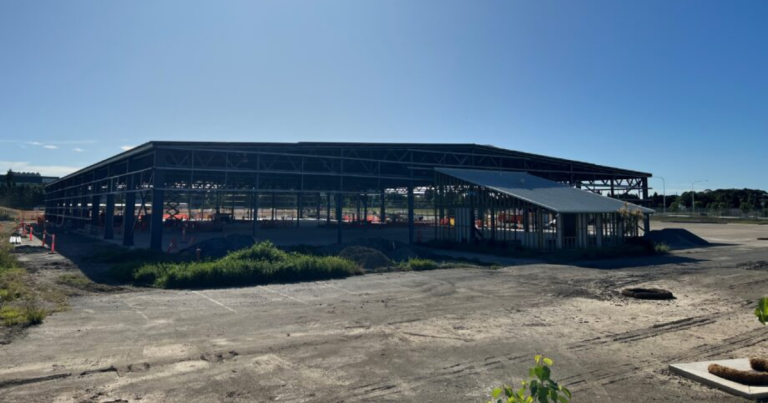
Construction is already underway for Australia’s first needle-free vaccine manufacturing facility, located in Northshore Hamilton.

An existing warehouse is being refurbished and transformed into this state-of-the-art, biomedical manufacturing facility. The construction phase has already generated 80 jobs for the local job market.

Once up, the facility will also generate employment opportunities for highly-skilled biomedical experts. Employment projections are estimated to be up to 110 in 2023 and could grow to more than 139 additional jobs over five years.


The project by Queensland biotechnology company Vaxxas is supported by the Economic Recovery Plan of the State Government.

Deputy Premier and Minister for State Development Steven Miles said that once delivered in early 2023 and operating at full capacity, the manufacturing facility is expected to produce needle-free vaccine kits that can deliver around 300 million doses annually.

Video credit:  Vaxxas – R&D Tax Incentive customer story | BusinessGovAu / YouTube

Vaxxas plans to deliver an influenza vaccine for its first project using the new technology. They will also look for opportunities to improve existing vaccines, including the ones used to fight COVID-19, in a bid to strengthen preparedness and response to future pandemics.

How does needle-free vaccine technology work?

Vaxxas Chief Operations and Development Officer Angus Forster said that through high-density microarray patch (HD-MAP) technology, a vaccine can be administered and deposited through the surface of the skin in a matter of seconds.

Photo credit: VAXXAS 2021 / vaxxas.com

These small patches are armed with thousands of micro-projections that carry the vaccine components and deliver them directly below the skin’s surface where plenty of immune cells reside, triggering a more efficient immune response. This technology also allows the patches to be stored at a temperature as high as 40 degrees making it less difficult to distribute the vaccines to rural and remote areas.

Photo credit: VAXXAS 2021 / vaxxas.com

Mr Miles further noted that the needle-free vaccine technology offers a fast and easy deployment of vaccines adding that supporting local biomedical companies is beneficial for Queensland and the rest of the world.


“That’s why Economic Development Queensland worked with Vaxxas to progress design and approvals for the facility, helping to grow the state’s economy,” he said.

Investigation On Eagle Farm Creek Turning Blue Is Now Underway

An investigation is now underway to determine why a tidal creek situated in an industrial area at Eagle Farm is turning blue.

The Department of Environment and Science (DES) is asking the public to assist in the ongoing investigation into the pollution event that happened at Eagle Farm last 27 November 2021. DES officers were called to the scene after it was reported that a section of the waterway just near Curtain Avenue had turned blue with some dead fish.

The officers who went to the scene witnessed a strong blue colouration of the creek which is an indication of a discharge of pollutants. They also saw a number of dead fish. DES officers have already taken water samples and fish samples for analysis, which they said could take weeks. Only then will they be able to determine the type of contaminant and how extensive the damage has been.


Whilst an inspection of the area, days after the pollution event was reported, revealed that the colour of the water has returned to normal, DES is still encouraging anyone who has information to call the Pollution Hotline on 1300 130 372.

Photo credit:  Kgbo, CC BY-SA 4.0 <https://creativecommons.org/licenses/by-sa/4.0>, via Wikimedia Commons

Did you know?

In Queensland, it is unlawful to deposit prescribed water contaminants on roadside gutters, stormwater drainage, creeks and rivers. Prescribed water contaminants are pollutants that can wreak havoc on stormwater systems — not to mention the aquatic life whose survival greatly depends on good water quality. 

Under the Environmental Protection Regulation 2008 – Schedule 9, the prescribed water contaminants include:

  • A chemical, chemical waste containing a chemical such as biocide, including fungicide, herbicide, and pesticide; chemical that causes biochemical or chemical oxygen demand; and a decreasing agent.
  • Gas other than oxygen
  • A liquid that contains a suspended or dissolved solids
  • Clinical wastes
  • Industrial wastes
  • Oil, including petroleum or vegetable-based oil
  • Paint, paint scrapings or residues, pain sludge, water used diluting paint or washing painting utensils, and waster from paint stripping
  • Waste and waste water, generated from outdoor cleaning
  • Glass, metal parts, paper, piping, plastic and scrap metal
  • Waste generated from repairing or servicing motor vehicles


What you can do to help care for our waterways

The Brisbane City Council suggests the following to help keep our waterways clean:

  • Need a car wash? You may wash your car on the grass or go to a car wash. This way you help keep soap and suds out of the stormwater drain.
  • When there is a heavy downpour, prevent dog waste or any animal manure from running off into our waterways or stormwater drains.
  • Dispose of hazardous wastes properly and out of the drain
  • Don’t let erosion and sediment get their way into waterways
  • Don’t litter. Your rubbish should always go into the trash bin.
  • If you have to, use fertilisers and garden chemicals sparingly
  • Do not dump unwanted fish into waterways or flush them in your toilet. Aside from the  fact that it is not a humane way of getting rid of your aquarium, these fish can also be invasive and destroy ecosystems.
  • Report any information about stormwater pollution.