


Hamilton Crash Involving Allegedly Stolen Vehicle Leads To Teen Charge

A serious multi-vehicle crash in Hamilton has resulted in a teenager being charged after an allegedly stolen vehicle collided with two other cars, leaving several people in hospital.


Crash Unfolds On Kingsford Smith Drive

Emergency services were called to Kingsford Smith Drive in Hamilton around 4:28am on 7 April following reports of a three-vehicle collision involving a Land Rover, a Mazda and a Toyota. The incident occurred in the early hours, drawing police to the scene.

Officers later confirmed the Land Rover had been reported stolen from a residential address overnight. The vehicle was identified as part of the crash, with its occupants taken into custody a short distance from the scene.

Hamilton crash
Photo Credit: QPS/Facebook

Teen Occupants Taken Into Custody

Four occupants of the Land Rover, all teenagers, were located nearby and taken into custody. The group included a 17-year-old boy, along with three others aged between 14 and 16.

All four were transported to hospital under police guard for treatment. The three younger occupants remained in Brisbane hospitals under police guard following the incident.

Injuries Across Other Vehicles

The crash also resulted in injuries to occupants of the other vehicles involved. Two men travelling in the Mazda sustained serious injuries and remained in hospital.

The driver of the Toyota, who was alone in the vehicle, did not sustain physical injuries.

traffic incident
Photo Credit: QPS/Facebook

Charge Laid Following Hamilton Crash

Following further investigation into the Hamilton crash, the 17-year-old boy was charged with multiple offences. These included enter dwelling and commit, receive tainted property, unlawful use of a motor vehicle, dangerous operation of a motor vehicle, and failing to remain at the scene of a traffic crash.

He was refused bail and was due to appear in Brisbane Childrens Court on 8 April. The matter forms part of ongoing inquiries into the circumstances surrounding the crash.

Investigations Continue

Investigators specialising in criminal and crash analysis are continuing to examine the incident. Authorities have also sought information and vision from the public to assist with inquiries.


Parts of Kingsford Smith Drive remained closed for a period as investigations were carried out in the Hamilton area.

Published 9-Apr-2026

Hamilton Small Businesses Face Uncertainty as Luxury Development Moves In

A high-stakes legal battle has broken out in Hamilton where a local dessert bar is suing a major property developer to stop the forced closure of a popular community shopping strip.


The Fight for Racecourse Road

hamilton
Photo Credit: Krazy AU/ Instagram

The conflict began on a Wednesday morning when workers for the developer, Graya, allegedly arrived at the Racecourse Road site to change locks and cut power to existing shops. This move came as a shock to the owners of Krazy Dessert Hamilton, who believe they have a legal right to stay in their shop for several more years. The business owners claim their current lease includes a specific agreement that prevents them from being kicked out for demolition purposes until 2030. 

Because of the sudden loss of power and access, the shop has reported a total loss of their food stock and a complete halt to their daily earnings. They are now asking the court to step in and protect their right to trade under what they describe as a valid and binding legal contract.

Developer Defends Site Clearance

The developer, known for high-end residential projects, plans to replace the current shops with a five-storey apartment complex featuring thirty-seven luxury units and a new pedestrian walkway. A representative for Graya stated that the company is confident they followed the law when ending the business leases at the site. 

They suggested that if the tenants disagree with the move, the proper place to settle the argument is through the legal system. While the developer had previously handed out flyers suggesting that work would start in March 2025, the recent fencing and utility cuts suggest they are eager to begin the transformation of the Hamilton streetscape as soon as possible.

Heartbreak for Local Shopkeepers

Photo Credit: Krazy AU/ Instagram

The impact of the looming demolition stretches beyond the courtroom, hitting long-term local workers and newer investors alike. At Ascot News and Tobacconist, staff described the situation as devastating for the neighborhood, noting that there are no other available spaces nearby for the newsagent to move into. Next door, the owner of Siam Pagoda Thai Garden is facing a significant financial blow after only being in business for a few months. 

The restaurant owner reportedly spent a large amount of money setting up the shop recently and is now left with deep disappointment and no immediate plans for the future. While Brisbane City Council does not require a special permit for the demolition itself, the community remains upset about the loss of a hub that has served residents for years.


A Changing Neighbourhood

This specific block is becoming a central point for massive change in the inner north of the city. On either side of the Graya site, other developers like Fortis are also planning to tear down older buildings to make way for modern apartments and upscale food outlets. One nearby project even takes design cues from the local St Augustine’s Church to try and fit in with the area’s history. 

Despite these attempts at stylish design, the current residents and shopkeepers are focused on the immediate loss of their livelihoods and the stress caused by the rapid pace of the construction takeover.

Published Date 07-April-2026

Hamilton’s Collins Foods Exits Taco Bell to Double Down on KFC in Europe

Collins Foods Limited, the Brisbane-based restaurant operator headquartered on Kingsford Smith Drive in Hamilton, has announced the sale of 20 of its 27 Taco Bell restaurants as it sharpens its focus on growing its KFC business in Europe.


The ASX-listed company entered into a legally binding arrangement with YUM! Brands, the global owner of the Taco Bell brand, and Restaurant Brands Australia to transfer the 20 restaurants to new ownership. The remaining seven Taco Bell locations will close, with Collins Foods absorbing a $1.2 million hit to its bottom line as a result.

Managing director and CEO Xavier Simonet described the move as an opportunity to focus on the company’s core KFC business, with particular attention to accelerating profitable development in Germany.

A Queensland Company with More Than Five Decades of History

Collins Foods’ roots in Queensland stretch back to 1968, when it first obtained the KFC franchise for the state. The company opened its first restaurant in Kedron the following year and introduced the drive-through format to Australia in 1979, a concept now standard across the country.

Collins Food Limited logo
Photo Credit: Wikipedia

The company’s headquarters moved to Brisbane in 2005 following a private equity acquisition, and it has been listed on the Australian Securities Exchange since 2011. Its corporate offices now sit at Level 3, KSD1, 485 Kingsford Smith Drive in Hamilton, placing it among the inner-city businesses that call Brisbane’s riverside precinct home.

The Taco Bell chapter began in 2018, when Collins Foods acquired the franchise rights for Australia. At its peak, the company operated 27 locations across Queensland, Victoria and Western Australia. The exit marks the end of that chapter, with the business returning to the brand’s global owner and its local partner.

Focusing on What Works for Collins Foods

For a company of Collins Foods’ size, concentrating resources on its strongest performer is a considered move. In 2025, Collins Foods reported annual revenue of $1.5 billion, up 2.1 per cent from the previous year, with net operating cash flow rising $5.1 million to $181.4 million.

The European expansion is gathering pace. Earlier in March, Collins Foods acquired eight KFC restaurants in Germany for $50 million, and also extended its corporate franchise agreement with YUM! Brands covering the Netherlands. The company’s growth strategy targets the addition of 40 to 70 new KFC restaurants in Germany over the next five years.

Photo Credit: Collins Food Limited

With 288 KFC restaurants across Australia and a growing European footprint spanning Germany and the Netherlands, the Taco Bell sale clears the runway for a more focused international push.

How the Sale Affects Staff and Store Operations

YUM! Brands and Restaurant Brands Australia will take over the 20 restaurants and continue operating them under the same ownership arrangement, with employees transferring to the new owners as part of the transaction. The deal uses a stock-based purchase structure, with the incoming owners also assuming the lease liabilities for all 20 sites.

The seven locations earmarked for closure represent the smaller, harder-to-transition portion of the portfolio. Collins Foods has not specified which sites will shut, though further detail is expected as the transaction moves toward completion.

Shares in Collins Foods fell 2.62 per cent in morning trade on the day of the announcement.

Keeping Across the Story

Collins Foods is an ASX-listed company trading under the code CKF. Updates on the Taco Bell transition and the company’s European expansion plans are available at collinsfoods.com. Media and investor enquiries can be directed through the company’s Hamilton headquarters at 485 Kingsford Smith Drive, Hamilton QLD 4007.


Published 01-April-2026

Brisbane Airport Issues Safety Alert Ahead Of Easter Travel Surge

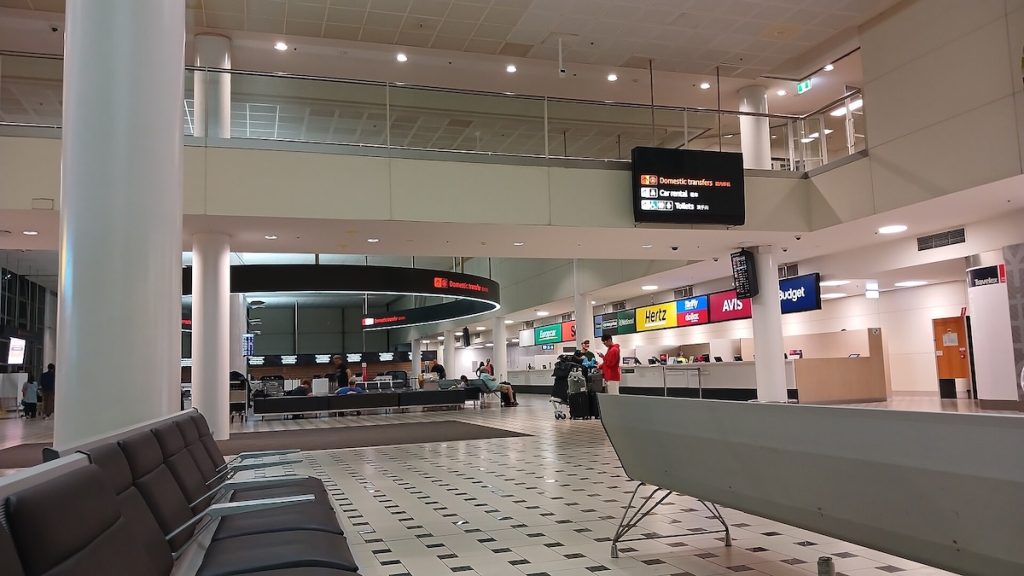
Brisbane Airport has urged travellers to prioritise safety during the busy Easter period, releasing CCTV footage that reveals common injuries and incidents across its terminals.


Easter Rush Drives Safety Reminder

More than one million passengers are expected to travel through Brisbane Airport during the Easter holiday period, placing increased pressure on terminal spaces and facilities.

In 2025, the airport recorded 25 million passengers and 187 public injuries, most of which were minor and required first aid treatment. Despite rising passenger numbers, reported incidents declined across 2024 and 2025.

The safety push aims to further reduce injuries by encouraging travellers to follow signage, allow enough time, and avoid rushing through busy areas.

Footage Highlights Preventable Terminal Injuries

CCTV vision released by Brisbane Airport shows a series of incidents involving passengers navigating escalators, travelators and car park areas during peak travel periods.

The footage captures travellers losing balance while handling heavy luggage, as well as collisions occurring at boom gates. These incidents are being used to highlight preventable risks within the airport environment.

Airport authorities are encouraging passengers to remain alert and move carefully through terminals, particularly when managing baggage and travelling with children.

Escalators And Travelators A Major Source Of Injuries

About 30 per cent of injuries at Brisbane Airport occur on escalators and travelators, making them a key focus of the safety campaign.

Incidents often involve passengers attempting to manage bulky or multiple bags, leading to loss of balance and falls. Surveillance vision also highlights preventable injuries involving older travellers in these situations.

Travellers with heavy luggage or mobility concerns are being advised to use lifts instead of escalators or travelators.

Suitcase Riding Among Common Causes Of Child Injuries

The footage also highlights incidents involving children riding on suitcases inside the terminal, a practice identified as a frequent cause of injury among younger travellers.

Children positioned on luggage are more likely to lose balance due to instability, increasing the risk of falls onto hard flooring surfaces.

Parents and carers are being reminded to supervise children closely and avoid using suitcases as a means of transport.

Practical Safety Tips For Travellers At Brisbane Airport

Brisbane Airport is encouraging travellers to follow simple measures to reduce the risk of injury while moving through terminals and surrounding areas.

Key safety advice includes not placing children or babies on suitcases, using lifts when carrying heavy bags, and holding handrails when using escalators or travelators.

Passengers are also advised to supervise children closely and avoid play around baggage carousels, trolleys and other airport equipment, while following safety signage throughout terminals.


Additional guidance includes using approved pedestrian paths in car parks, avoiding movement under boom gates, and allowing enough time to move through busy areas without rushing.

Published 30-Mar-2026

The Hamilton Warehouse Where You Can Paint the Walls and Grab a Coffee

A shared industrial space in Hamilton is redefining the morning coffee run by letting every customer leave their mark on the walls with a spray can.


The venue, known as Warehouse Cafe, operates inside the Superordinary arts precinct at 175 MacArthur Avenue. It welcomes visitors Monday through Saturday from 7:00 am until 12:30 pm. This space is designed to be a flexible home away from home for residents of the rapidly growing Northshore area, offering a mix of hospitality and hands-on creativity.

A Workspace Built for Connection

The cafe has become a popular spot for those who work remotely, providing free access to 2GB high-speed internet. Unlike quiet traditional offices, this environment is filled with the sounds of a busy arts centre. It features both indoor and outdoor seating areas where people can finish their daily tasks. 

To make the workday more enjoyable, the venue provides a community library and a collection of board games for breaks. The entire site is also pet-friendly, allowing locals to bring their dogs along while they work or catch up with friends.

Where Street Art Meets Breakfast

What sets this spot apart from a standard coffee shop is the interactive “jam walls” located outside. These walls act as an ever-changing gallery where anyone can pick up a can of paint and contribute to the decor. For those who prefer to look rather than participate, the interior serves as a large professional gallery for local creatives to display their work. 

The food menu focuses on simple, high-quality items such as build-your-own crumpets and smashed avocado topped with tomato medley, capers, and a tangy balsamic reduction. All drinks are made using Allpress coffee beans, ensuring the quality of the brew matches the high energy of the surrounding art.


Fueling the Local Creative Scene

The precinct serves as more than just a place to eat; it is a functional tool for the Brisbane arts community. The venue houses an artist paint shop and a vinyl record setup that local DJs can use upon request. Throughout the month, the space hosts a variety of scheduled programming, including culinary festivals, dance music events, and hands-on workshops. 

For those who commute by bike along the Brisbane River, the cafe provides plenty of dedicated parking, making it a convenient pit stop for active locals looking to connect with their neighbours in a creative setting.

Published Date 18-March-2026

Hamilton Mansion At 60 Riverview Terrace Sold For $6.5 Million

A residential estate in Hamilton has sold for $6.5 million, about a year after it was purchased by NAK Hair co-founder Tony Rigney.


The property at 60 Riverview Terrace changed hands on 2 March 2026, with the transaction handled by Nick Roche of Ray White Ascot following strong buyer interest during the campaign.

Photo Credit: Ray White Ascot

Hamilton Property Sale

Tony Rigney, a co-founder of Australian haircare brand NAK Hair, sold the Hamilton residence roughly twelve months after acquiring it. The resale reportedly resulted in an estimated $700,000 gain.

The sale attracted multiple buyers during the campaign, including interest from an overseas party and a local family. The property was ultimately purchased by a local family.

NAK Hair was founded in 2003 by Tony Rigney and John Cash together with their wives, Carmen and Karen. The company operates from Eagle Farm in Queensland and remains an Australian-made professional haircare brand.

Hamilton property sale
Photo Credit: Ray White Ascot

Features Of The Hamilton Residence

The property, known as Riverview Palace, occupies a 1,026-square-metre block at 60 Riverview Terrace.

The residence includes four bedrooms, three bathrooms and parking for two vehicles. It also contains a main residence and a self-contained lower-level retreat, offering additional living space.

Architectural details in the home include timber floors, high ceilings, plaster mouldings and a fireplace. The property also features outdoor entertaining areas and a private swimming pool.

Brisbane real estate
Photo Credit: Ray White Ascot

Historical Background Of The Property

The Hamilton residence dates back to 1901 and has historical links to the David Jones retail family. It has also previously been owned by former Wallabies captain John Eales.

One of the home’s most recognisable features is a domed observatory-style tower. The structure offers wide views across the Brisbane River, Moreton Bay and the Gateway Bridge and has been linked to monitoring activity during World War II.

Ray White Ascot
Photo Credit: Ray White Ascot

Buyer Plans

The new owners intend to carry out extensive renovations to the property.

Located near Racecourse Road and Portside Wharf, the Riverview Terrace residence sits within one of Hamilton’s established residential areas known for elevated river outlooks and large homes.


The sale adds another multi-million-dollar transaction to the Hamilton property market, highlighting continued buyer competition for large homes in the suburb.

Published 13-Mar-2026

Grand Hamilton Hill Mansion Changes Hands For $6.5M

A grand Federation-era mansion perched on Hamilton Hill has changed hands for $6.5 million, delivering its owners a $700,000 gain in just twelve months — and without a single renovation being carried out in that time.


The four-bedroom property at 60 Riverview Terrace, known as Newnham, sold on Monday after sitting in the current owners’ hands for barely a year. They had purchased it in March 2025 for $5.8 million, making for a tidy return by any measure.

Photo Credit: Ray White Ascot

The home has a storied history stretching back to 1901, when it was reportedly built by department store owner William Overell. Since the late 1920s, the front verandahs have been enclosed with arched openings and Taj Mahal-inspired domes added to the facade — giving the property its distinctive, one-of-a-kind silhouette on the Brisbane skyline.

Photo Credit: Ray White Ascot

Perhaps its most unusual feature is a tower dating from the Second World War era, said to have been used by American forces as a strategic observation post. The tower offers panoramic 360-degree views across the surrounding area and is a tangible reminder of Brisbane’s wartime significance.

Photo Credit: Ray White Ascot

Over the decades, Newnham has passed through notable Queensland hands. Rugby legend John Eales sold the property back in 2001 for $1.1 million. A subsequent owner held it for roughly two decades before selling during the COVID period for $3.8 million — at which point the price trajectory began to accelerate sharply.

Photo Credit: Ray White Ascot

The sale was handled by Ray White Ascot agent Nick Roche, who also managed the 2025 transaction. He had described the listing as a rare opportunity on Hamilton Hill, citing the 1,026 square metre landholding, its favourable zoning, and the property’s position within Hamilton’s growing luxury corridor as key drawcards. The home had previously been available for rent at up to $2,500 per week.

Photo Credit: Ray White Ascot

Newnham sits within easy walking distance of Hamilton’s restaurants, supermarkets and boutiques — the kind of central convenience that continues to underpin strong demand in the suburb.

Photo Credit: Ray White Ascot


The sale is the latest data point in what has been a buoyant period for prestige property in Brisbane’s inner north, with Hamilton consistently attracting significant buyer interest.

Published 3-March-2026

Biotech Company Vaxxas Joins Global Consortium to Prepare Europe for Pandemic Influenza

Hamilton-based clinical-stage biotech company Vaxxas has won a phase one tender from the European Health and Digital Executive Agency to advance its needle-free vaccine patch technology as part of the EU-backed global pandemic influenza preparedness programme.


The tender was awarded on behalf of the Health Emergency Preparedness and Response Authority under the EU 2024 EU4Health Work Programme, which allocates up to $250 million across three competitive sequential phases. The phase one allocation of approximately $22 million will fund a clinical study combining Vaxxas’ high-density microarray patch technology with South Korean company SK bioscience’s seasonal influenza vaccine. The Consortium also includes European-based IDT Biologika, a contract developer and manufacturer of vaccines, gene and immune therapeutics with more than 100 years of operating history. IDT Biologika led the Consortium submission.

What the HD-MAP Technology Does

Vaxxas’ HD-MAP is a small patch containing thousands of microprojections approximately 0.25 millimetres in length, fabricated by injection moulding. The patch delivers vaccine to the high-density populations of immune cells directly beneath the surface of the skin, with the microprojections triggering immune responses that rapidly traffic vaccine components to lymph nodes. The coated patch sits inside a single-use applicator and administers the vaccine in a matter of seconds.

The technology carries several practical advantages over traditional needle-and-syringe delivery. The dried form of the vaccine is more stable at higher temperatures than vaccines in liquid formulations, and HD-MAPs have proven safe and tolerable in hundreds of trial participants, inducing equal or greater immune responses to injected vaccines at lower doses. The platform also has the potential to eliminate end-to-end refrigeration requirements, reducing the cold-chain logistics burden that slows vaccination rates in both routine and emergency settings. The core technology was originally developed at the University of Queensland, and Vaxxas was established to commercialise it.

Vaxxas
Photo Credit: Vaxxas

What Phase One Will Deliver

The phase one programme has two parallel workstreams. The first is a clinical study advancing Vaxxas’ HD-MAP technology in conjunction with SK bioscience’s seasonal influenza vaccine. The second is a pre-clinical development programme producing a clinic-ready HD-MAP for a pre-pandemic influenza vaccine.

All clinical products for phase one will be manufactured using Vaxxas’ proprietary sterile automated manufacturing lines at its Hamilton biomedical facility. Vaxxas is simultaneously completing a separate and largest-to-date phase one clinical study of its HD-MAP with a pre-pandemic influenza vaccine, supported by the US Government’s Biomedical Advanced Research and Development Authority.

The Consortium Partners

IDT Biologika, which led the Consortium submission, brings more than a century of vaccine development and manufacturing experience to the programme. SK bioscience, a South Korean vaccine company with a longstanding collaboration with Vaxxas, will supply vaccine antigens for both the seasonal and pandemic influenza studies across the programme.

Vaxxas chief executive David Peacock said the tender reflected a shared ambition across the Consortium and the European Union to invest in alternative vaccine technologies, and that the recognition of HD-MAP by governments worldwide confirmed its role as a component of future public health preparedness.

What Comes Next

If the Consortium successfully completes phase one, it becomes eligible to tender for subsequent phases covering late-stage clinical trials, application for marketing authorisation in Europe, and the establishment of a sovereign EU manufacturing capability.

Further information about Vaxxas and its HD-MAP technology is available at vaxxas.com. The company’s Hamilton biomedical facility is located at 240 MacArthur Avenue, Hamilton QLD 4007, within the Northshore Hamilton river precinct.


Published 3-March-2026.

Hamilton Development to Connect Suburban Streets with Northshore Precinct

Private developers Ashan Chaminda Sudrikku and Ganendren Somasegaram have lodged a proposal to transform a prominent Hamilton corner into a five-storey residential and short-term stay precinct.


A Shifting Streetscape

Photo Credit: DA A006952826

The development application, submitted in January 2026, outlines a plan to merge six separate lots between 642 and 652 Kingsford Smith Drive. This move would require the removal of three existing houses to make way for a modern, staged project. 

The first part of the build focuses on a 57-room building designed for short-term visitors, while the second stage introduces 24 permanent apartments. The planners at HAL Architects suggest the project acts as a bridge between the high-rise buildings of Northshore Hamilton and the quieter suburban streets further north.

Focus on Local Living

Photo Credit: DA A006952826

The design prioritises a quiet neighbourhood feel by keeping all car movements away from the main road. Instead of using Kingsford Smith Drive, the 96 planned parking spaces will be accessed only via Oxford Street. While there are no shops or cafes included in the plans, the site is positioned so residents can easily walk to the CityCat ferry, local parks, and the Racecourse Road shopping strip. 

To keep the area looking green, the developers have committed to deep planting and landscaping that covers nearly a quarter of the total land area, which is more than what the local council usually requires.

Practical Features and Environment

Photo Credit: DA A006952826

Living in the new buildings will involve some hands-on habits, as the plans do not include automated rubbish chutes. This means apartment residents will need to carry their waste to a shared bin room themselves. The height of the structures is set at roughly 17.5 metres to match the medium-density rules of the Brisbane City Plan. 

Because the land is near the river, the engineers have designed the habitable floors and the basement entries to sit safely above known flood levels. Even though the buildings will not feature solar panels on the roof, the design uses passive methods to help manage energy use naturally.


The Road Ahead

Because the project fits within the current zoning for the area, it is classified as code assessable. This means the Brisbane City Council can review and approve the plans without asking the general public for formal feedback or objections. 

The developers believe the location is perfect for short-term stays due to how close it is to the Brisbane Airport and the city centre. With three lifts shared across the two buildings, the site aims to provide a functional addition to the growing Hamilton community.

Published Date 23-February-2026

Northshore Hamilton Precinct Unlocked: 3,000 Homes and New Lifestyle Hub Coming to Brisbane’s Riverfront

Five parcels of land along Northshore Hamilton’s riverfront were released to the market on 17 February, in a move set to deliver 3,000 new homes to the precinct.


Read: Northshore Hamilton River Hub Set for New Wave of Tourism and Transport


Six hectares of riverfront real estate are now in play, with plans for a mixed-use precinct that goes well beyond just housing. Alongside residential development, the precinct is planned to include restaurants, bars and retail options.

More than $100 million in critical infrastructure will be invested to support the release, covering new roads and essential services. The land sits within the Northshore Hamilton Priority Development Area, a zone specifically designated for fast-tracked urban renewal, and the release is expected to bring forward around a decade’s worth of housing supply for the area, according to state officials.

Photo credit: Northshore Hamilton

Among the parcels being opened up is the former site set aside for a Brisbane Athletes Village ahead of the 2032 Olympic and Paralympic Games. That plan did not proceed, with the site now being redirected toward residential and mixed-use development. The inclusion of the former Athletes Village site adds to the total land now available for development within the precinct.

Restrictions previously described as stifling development within the Priority Development Area were wound back in the months prior to this release, helping to clear the path for the land to come to market.

Member for Clayfield Tim Nicholls pointed to the broader benefits the development is expected to generate, including new homes, infrastructure, investment and local jobs in the area ahead of the 2032 Games.

The Northshore Hamilton release is part of a broader push to address Queensland’s housing pressures, sitting under the state’s Securing Our Housing Foundations Plan — a target to deliver one million new homes across Queensland by 2044, including a pipeline of 53,500 social and community homes.

It follows the recently launched Land Activation Program, which put previously vacant state-owned land on the market and reportedly unlocked up to 800 homes in its first week.

Other measures running alongside the land release program include a $2 billion Residential Activation Fund, the removal of stamp duty on new builds for first home buyers, a $30,000 first home owner grant extended to June 2026, a shared equity scheme to help buyers close the deposit gap, and changes to subletting rules aimed at boosting rental availability.


Read: Consultation Opens on Northshore Hamilton Housing Plan


Developers and proponents keen to get involved in the Northshore Hamilton sites have until 4pm on 16 April 2026 to lodge proposals. Further information is available through Economic Development Queensland’s website.

Published 19-February-2026