

Satisfaction Rolling Stones Riff: How Keith Richards Found the Iconic Sound

By Jack Mercer – Rabbit Hole Fisherman 

One of rock music’s most recognisable riffs emerged from a mysterious bedside recording. But the greater surprise came later: Keith Richards thought the guitar sound that helped make the Rolling Stones famous was only a temporary substitute for something else.

In This Story

There are plenty of musicians who spend years searching for the one melody that might change their lives.

Keith Richards apparently found his while he was asleep.

Or at least, that is how he remembers it.

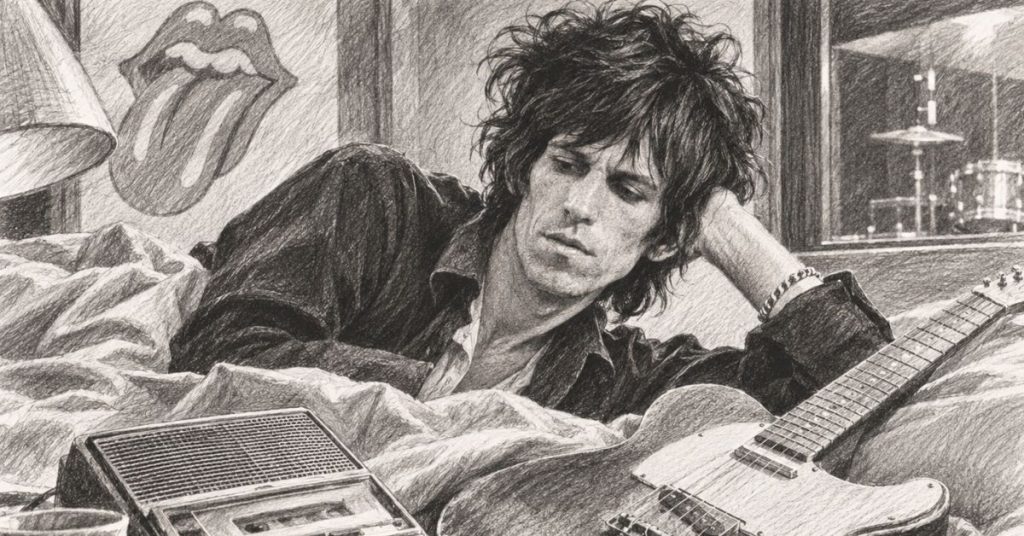
Sometime in 1965, Richards woke to discover that a portable tape recorder beside his bed had captured something during the night. He had no clear recollection of making the recording. But when he played it back, there was a short guitar idea, followed by a remarkably long stretch of snoring.

The guitar idea was the beginning of Satisfaction.

That alone would be enough to give the song a place in rock folklore.

But the more extraordinary story is what happened after Richards woke up.

The Rolling Stones developed the riff into a song, recorded it and released it in 1965. It became their first American No. 1 and one of the defining records of the decade.

Yet Richards later explained that the distorted guitar sound at the centre of the recording wasn’t what he had intended for the finished arrangement.

He had imagined horns playing that famous riff.

The guitar was supposed to be a guide.

And, according to bassist Bill Wyman’s later recollection, the band even held a vote about whether to release the record, with Richards and Mick Jagger reportedly among those opposed.

Imagine being in that room.

You’ve recorded a song that will become one of the most recognisable in rock history.

And the guitarist who invented its defining sound isn’t convinced it’s finished.

A tape recorder beside the bed

Keith Richards has told the story of the mysterious recording more than once, including in interviews and in his autobiography, Life.

The essential elements have remained familiar.

He had been experimenting with musical ideas and keeping a tape recorder close enough to capture them when they appeared.

One morning, he discovered that the machine had been used during the night.

He couldn’t remember what he had recorded.

When he listened, he found the beginnings of the riff that would become Satisfaction, followed by snoring.

The anecdote has often been simplified into the claim that Richards wrote the song in his sleep.

That’s an appealing headline, but it goes further than the evidence allows.

Richards could establish what he remembered discovering on the tape. He couldn’t independently establish that he had been asleep while playing the guitar.

There is also some uncertainty about exactly where the incident occurred. Different accounts have associated it with the Stones’ American tour and with Richards’ London home.

The safest conclusion is also the most interesting: Richards recalled finding a musical idea on a recording he didn’t remember making.

And that idea was worth keeping.

What makes the story particularly revealing is that Richards wasn’t describing a complete song arriving fully formed.

There was no finished lyric, no carefully developed arrangement and no certainty that the fragment would become a single.

There was a riff.

A small musical idea that needed other people, more work and several recording sessions before it could become the record we know.

The Rolling Stones in 1965

By the spring of 1965, the Rolling Stones were no longer an obscure London rhythm-and-blues band.

They had established themselves in Britain and were building an increasingly substantial American audience.

But they were still in the process of developing their identity as songwriters.

Much of their early repertoire had drawn on American blues and rhythm and blues. Those influences remained fundamental, but manager Andrew Loog Oldham had encouraged Mick Jagger and Keith Richards to write original material.

The partnership was beginning to deliver.

Jagger was becoming an increasingly distinctive singer and lyricist. Richards was developing an instinct for guitar figures that could give a song its entire identity.

Satisfaction would bring those talents together with extraordinary force.

The riff was direct and repetitive. It didn’t need virtuoso playing or an elaborate musical introduction.

It established the song’s character almost immediately.

Jagger’s vocal supplied a different kind of energy: impatience, frustration and a sense of being surrounded by promises that never quite delivered what they advertised.

The lyrics reflected dissatisfaction with consumer culture, media messages and personal relationships.

It was a striking subject for a pop single at a time when so many chart records revolved around romance.

But the song’s attitude wasn’t the only thing that made it stand out.

Its sound was about to become just as important.

The first recording wasn’t the famous one

The Rolling Stones recorded an early version of Satisfaction at Chess Studios in Chicago on 10 May 1965.

Chess was an important destination for the group.

The studio was associated with artists whose records had helped shape the Stones’ musical education, including Muddy Waters and Chuck Berry.

For young British musicians who had grown up listening to American blues and rhythm and blues, recording there carried particular significance.

But the Chicago session did not produce the familiar hit recording.

Two days later, on 12 May, the band recorded the version that would become famous at RCA Studios in Hollywood.

That session brought together Jagger’s vocal, Richards’ guitar, Bill Wyman’s bass, Charlie Watts’ drums and Brian Jones’ contributions to the arrangement.

The result was powerful, urgent and unmistakably the Rolling Stones.

And at its centre was a sound that Richards regarded as unfinished.

The guitar that was pretending to be a horn section

The defining guitar sound on Satisfaction came from a Gibson Maestro Fuzz-Tone effects pedal.

The device altered the guitar’s signal to produce a sustained, distorted tone.

Today, guitar effects pedals are commonplace. Musicians can choose from countless devices designed to reproduce almost any imaginable sound.

In 1965, a fuzz pedal was still a relatively novel piece of equipment.

Richards used the effect to give the riff a brassy, forceful character.

But he wasn’t necessarily trying to create the final guitar arrangement.

In later interviews, he explained that he had imagined the riff being played by horns.

The fuzz guitar was intended to indicate how that horn section might work.

This is where the history becomes particularly fascinating.

The guitar sound that would help define the Stones’ identity was, in Richards’ conception, a substitute for another arrangement.

It was a musical sketch.

A way of communicating an idea.

But the sketch had something the imagined finished arrangement might not have possessed.

The fuzz effect gave the riff an abrasive edge.

It sounded impatient.

And it sounded slightly dangerous.

It suited Jagger’s vocal and the song’s mood of frustration.

And because the riff was so prominent, the effect became impossible to ignore.

The guitar wasn’t simply accompanying the song.

It was announcing it.

We can never know whether a horn-led Rolling Stones recording would have been equally successful.

It might have been magnificent.

It might have disappeared into the crowded pop charts of 1965.

What we do know is that the version with Richards’ fuzz guitar became a worldwide hit.

And Richards had not expected that particular sound to be the final word.

The single the songwriters weren’t sure about

It seems almost impossible now that anyone could have doubted Satisfaction.

But in 1965, the Rolling Stones were not listening to a future classic. They were listening to a new recording and trying to decide whether it was ready to release.

Richards’ reservations about the guitar arrangement are well documented. He had wanted a horn section, and he did not regard the fuzz-guitar sound as the definitive treatment of the riff.

Mick Jagger later remembered Richards being unconvinced that the composition was suitable for a single.

And Bill Wyman subsequently described a band discussion in which the proposed release was put to a vote.

According to Wyman’s recollection, Jagger and Richards opposed releasing the recording, while the other participants supported it.

That is an extraordinary detail, although it needs an important qualification: it is Wyman’s retrospective account, not a surviving transcript of the discussion. The precise voting arrangements should not be presented as independently verified.

Even with that qualification, the disagreement tells us something revealing about the band.

The musicians weren’t necessarily hearing the same thing.

Richards was thinking about an arrangement he had not yet achieved.

Others heard a recording with enough energy and character to stand on its own.

Neither perspective was unreasonable.

Musicians often hear the distance between the recording they have made and the one they imagined. Listeners, meanwhile, have no knowledge of the unrealised version. They judge what comes out of the speakers.

In this case, the recording won.

And rock music acquired one of its most recognisable guitar sounds.

The record that changed everything

Satisfaction was released in the United States in June 1965.

It became the Rolling Stones’ first American No. 1 single.

The band’s record company, ABKCO, identifies the song as the release that helped propel them into international superstardom.

The achievement was significant.

The Rolling Stones had already enjoyed considerable success in Britain, and they were increasingly popular in America. But Satisfaction took them into a different commercial category.

Its success wasn’t confined to the United States. It also reached No. 1 in Britain, where its chart run began in September 1965.

The timing was important.

The mid-1960s were transforming popular music. British groups were achieving enormous success in America, while electric guitars, amplification and studio experimentation were changing what pop records could sound like.

Satisfaction captured several of those developments in a single recording.

Its rhythm-and-blues foundations were unmistakable.

Its guitar sound was unusually aggressive for a mainstream hit.

And Jagger’s delivery gave the song an attitude that seemed perfectly suited to an increasingly restless youth audience.

There was also something unusually effective about the relationship between the riff and the vocal.

The guitar made a statement.

Jagger answered it.

Then the guitar returned.

The pattern was simple enough to remember immediately, but strong enough to carry the entire recording.

That simplicity would prove crucial to the song’s longevity.

You didn’t need to remember the verses to recognise it.

You only needed a few notes.

Then Otis Redding showed Richards another possibility

Later in 1965, American soul singer Otis Redding recorded his own interpretation of Satisfaction.

And this is where the story takes its most satisfying turn.

Redding’s recording included the prominent horn arrangement that Richards had originally imagined.

It was not an exact reconstruction of Richards’ unrealised version. Redding and his accompanying musicians brought their own rhythmic approach, vocal phrasing and soul sensibility to the song.

But the horns made an important difference.

They demonstrated how effectively the riff could work outside the distorted-guitar arrangement.

Richards has spoken approvingly of Redding’s interpretation, recognising its connection to the sound he had initially envisaged.

Consider the sequence of events.

A guitarist discovers a riff on a tape he doesn’t remember recording.

He develops it into a song with his writing partner.

The band records it using a fuzz pedal because the guitarist is imagining horns.

The resulting guitar sound becomes a defining feature of the record.

Then the song reaches No. 1.

And then one of America’s great soul singers records it with horns.

The musical idea had travelled almost full circle.

But something else had happened along the way.

The two recordings demonstrated that a great riff need not belong to one particular instrument.

Richards’ idea could be played by a distorted electric guitar or a horn section.

It could sit inside the Rolling Stones’ rough-edged rock arrangement or Redding’s powerful soul interpretation.

The notes were recognisable in either setting.

The character of the performance changed.

That is an important distinction.

The riff was the composition’s essential musical identity.

The fuzz guitar was the sound that made the Stones’ recording distinctive.

And the combination of the two was what listeners around the world heard in 1965.

The difference between a great idea and a great record

It’s tempting to describe Satisfaction as an accident.

After all, the original musical idea emerged under extraordinary circumstances, and the famous guitar sound was not the arrangement Richards had intended to keep.

But calling the finished record accidental would diminish what the musicians accomplished.

Richards may have discovered the riff unexpectedly, but he recognised that it was worth developing.

Jagger helped turn the fragment into a complete song.

The Rolling Stones worked through more than one studio version.

And the finished recording depended on the performances of the musicians and the decisions made during the sessions.

Chance provided an opportunity.

The band did the work.

That distinction matters because stories about sudden inspiration can create a misleading picture of songwriting.

A musician wakes up with a melody.

A singer thinks of a phrase while travelling.

Then, a guitarist accidentally produces an unusual sound.

Those moments make excellent anecdotes.

But the work that follows is usually less mysterious.

Ideas are tested.

Lyrics are rewritten.

Arrangements are reconsidered.

Recordings are rejected.

And sometimes a musician has to be persuaded that the version already on tape is good enough.

That was the situation Richards found himself in.

He could hear something different in his imagination.

The world, meanwhile, was about to fall in love with the recording he had made.

The riff that never went away

More than sixty years after its release, Satisfaction remains one of the songs most closely associated with the Rolling Stones.

Its opening riff has survived changes in musical fashion, recording technology and the way audiences discover music.

That endurance is especially remarkable when you consider how little musical information is required to identify it.

There is no elaborate introduction.

No extended instrumental passage.

No need for the singer to announce the title before the listener knows what’s coming.

The guitar does the work almost immediately.

And once you’ve heard the story of its creation, it’s difficult to listen to the recording in quite the same way.

That abrasive, sustained guitar tone was meant to suggest another instrument.

The riff had emerged from a recording its creator didn’t remember making.

And the musician responsible for both was reportedly unconvinced that the finished track should be released as it stood.

The song’s history is a reminder that artists are not always the best judges of which of their experiments will become indispensable.

Sometimes an unfinished idea is precisely what makes a recording distinctive.

Sometimes the sound a musician wants to replace is the sound everyone else wants to hear again.

And sometimes a tape recorder captures something that changes the course of a career.

What was really on that tape?

There is one final detail worth remembering.

We have Keith Richards’ account of the mysterious recording.

He has told it repeatedly, including in a substantial interview with Terry Gross on Fresh Air. In that conversation, he described discovering an embryonic version of the song, followed by about 40 minutes of snoring. He also explained how he and Jagger typically developed musical fragments into finished compositions.

That is valuable firsthand testimony.

But the original bedside tape is not publicly available as an authenticated recording that listeners can examine for themselves.

So the story rests on Richards’ recollection.

We don’t need to embellish it.

We don’t need to claim that a complete song arrived in a dream, or that every note was composed while he was unconscious.

The account he has given is already remarkable enough.

A young guitarist wakes up.

He notices that his tape recorder has run to the end.

He rewinds it.

And he hears something he doesn’t remember playing.

Then he hears himself snoring.

Within weeks, that musical fragment has become the foundation of a recording that will transform his band’s career.

And the sound that makes it famous is one he had intended to replace.

There’s a wonderful irony in that.

Keith Richards spent much of his career searching for the perfect guitar sound.

On Satisfaction, he found one that millions of listeners would never forget.

He just hadn’t realised it was the one he wanted.
How Fleetwood Mac’s “The Chain” Became Formula 1’s Signature Sound

By Jack Mercer – Rabbit Hole Fisherman

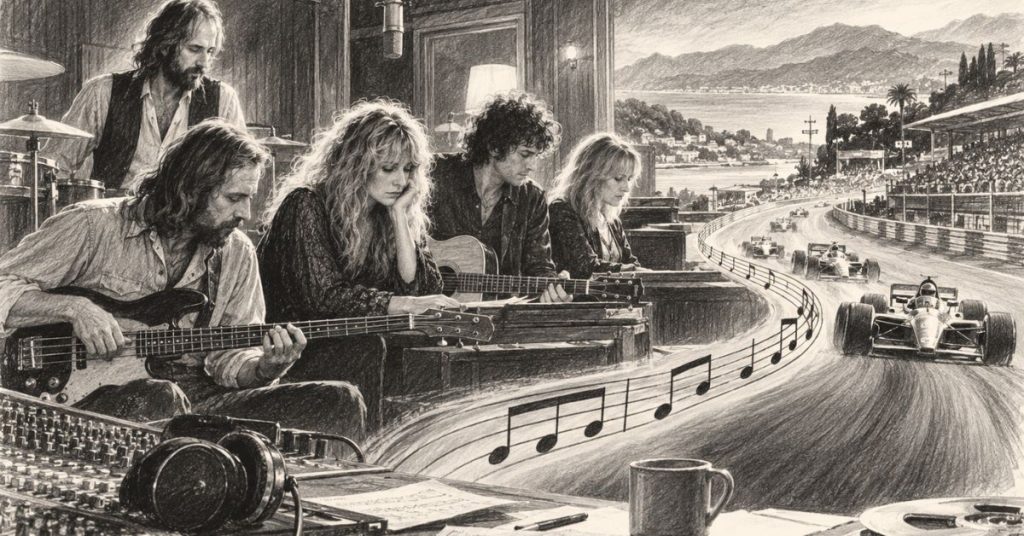
Five musicians, relationships under strain and a song assembled from discarded pieces: this is how Fleetwood Mac created a recording that millions would recognise without necessarily knowing its name.

For generations of Formula 1 fans, it has been one of the most recognisable sounds in sport.

In This Story

A bass guitar begins playing a low, insistent pattern. The drums gather momentum. Then an electric guitar comes roaring in, and suddenly you are thinking about racing cars, starting grids and Sunday afternoons in front of the television.

It is a thrilling piece of music. And for many people, that is where the familiarity ends. They know the sound and what it means, but might struggle to name the song.

The music is the closing section of Fleetwood Mac’s The Chain, from their 1977 album Rumours. Its history is almost as extraordinary as the circumstances in which it was recorded.

The five musicians responsible were working through considerable personal difficulties. Lindsey Buckingham and Stevie Nicks were separating, John and Christine McVie’s marriage was ending, and Mick Fleetwood’s marriage was under strain. Yet the group continued to record together.

Somehow, they produced one of rock’s most successful albums. Hidden among its more conventional songs was a remarkable musical puzzle: a composition that took shape from fragments and extensive studio work.

Five musicians who had to keep working together

Fleetwood Mac began in Britain in 1967 as a blues band associated with guitarist Peter Green. Mick Fleetwood and John McVie were central to its early sound. Christine McVie later joined, adding a distinctive voice and gift for melody.

At the end of 1974, American musicians Lindsey Buckingham and Stevie Nicks joined. Their arrival helped reshape the group’s sound and commercial fortunes. The self-titled 1975 album brought international success with songs including Rhiannon, Say You Love Me and Over My Head.

By the time Rumours was being made, the band had become bigger, more ambitious and far more complicated. Making its successor meant bringing five people into the studio at a moment when several of their closest relationships were breaking down.

The situation is sometimes presented as an uninterrupted soap opera. That would diminish the work. Whatever their personal disagreements, these were highly capable musicians who could still listen, arrange, revise and perform together.

That combination of tension and discipline would define the record. The Chain would become the clearest example of it.

The song that started with an ending

During the Rumours sessions at the Record Plant in Sausalito, California, the group worked on a Christine McVie composition called Keep Me There, also associated with the working title Butter Cookie.

According to co-producer and engineer Ken Caillat, the musicians struggled to make the recording cohere. But during work on the track, John McVie came up with a compelling bass passage. The band built an energetic instrumental ending around it, with Buckingham adding guitar.

They had found something worth keeping. What they did not yet have was a finished song.

Caillat recalled that the group returned to the material repeatedly over many months. Its most exciting section was also its most awkward problem: how could the rest of the composition lead convincingly into that ending?

Late in the sessions, Buckingham devised a way forward. Rather than preserve the existing verses, he reworked the structure. Caillat described cutting blank tape into the recording, replacing sections, recording a new bass-drum pulse and changing the arrangement. Buckingham also played Dobro and reshaped the chorus.

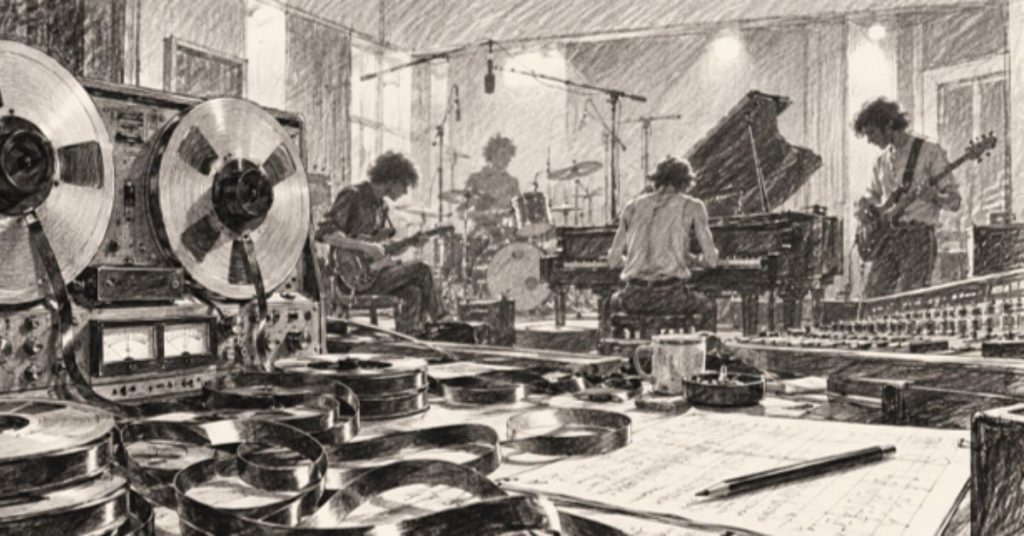
This was analogue recording, not a digital workstation. Engineers physically edited multitrack tape, and the musicians built the finished performance from material recorded at different stages.

The Chain was not simply captured as one uninterrupted band performance. It was painstakingly assembled.

A song credited to everyone

The official songwriting credits for The Chain name all five members: Lindsey Buckingham, Mick Fleetwood, Christine McVie, John McVie and Stevie Nicks. It is the only track on the original Rumours album credited to the entire group.

Those credits are a more reliable guide than any attempt to assign each person one neat, exclusive piece of the finished song. Firsthand accounts describe an overlapping process of writing, arrangement, playing and editing, and recollections can differ in emphasis.

What is clear is that the finished recording depended on contributions from across the band, as well as the production work that brought them together.

There is an irony in that. People struggling to sustain their personal relationships found a way to make disconnected musical pieces function as a whole. But that is an observation about the finished work, not proof that all five intended a single symbolic message.

Rumours arrives

Released in February 1977, Rumours included Dreams, Go Your Own Way, Don’t Stop, You Make Loving Fun and Gold Dust Woman. It reached No. 1 in major markets and became one of the biggest-selling albums in recording history.

On the original LP, The Chain opened side two, following Christine McVie’s quiet Songbird at the end of side one. The contrast was striking.

The Chain begins with a measured pulse, acoustic textures and interwoven voices. It gradually builds, but its most familiar moment comes after the vocal sections have ended.

Then John McVie’s bass line takes over.

The passage works not because it is technically showy, but because of its tone, repetition and momentum. Fleetwood’s drums build around it; Buckingham’s electric guitar turns the ending into a release of accumulated tension.

The band’s official expanded Rumours editions include versions of Keep Me There and a demo of The Chain. These provide unusually direct evidence of how the musical ideas evolved.

Yet the musicians could hardly have anticipated the recording’s second life.

How The Chain became the sound of Formula 1

In 1978, the BBC adopted the closing instrumental section of The Chain for its Formula 1 television coverage.

The fit was immediate. The bass line creates anticipation; the drums add urgency; the guitar-led ending supplies a climax suited to pictures of racing cars and starting grids.

The association lasted through the BBC’s coverage until 1996. When ITV took over British Formula 1 broadcasting in 1997, it used other music.

When Formula 1 returned to BBC television in 2009, The Chain returned too. Its revival was greeted as the restoration of a familiar part of the viewing experience.

Channel 4 retained the music when it assumed Britain’s free-to-air coverage in 2016. But the association was not unbroken: reporting in 2019 documented Channel 4’s move away from The Chain as its signature theme.

The important point is not that one broadcaster used the same recording continuously forever. It is that a section of an album track became so closely linked to a sport that its return could itself become news.

A song with two lives

Music often escapes the circumstances of its creation. A song written about a relationship can become associated with a film, a family event or a sporting moment. Listeners attach their own memories to it.

The Chain has two particularly vivid identities.

On Rumours, it is part of a record made by five musicians working through a turbulent period. The structure itself bears the marks of experimentation and collaboration.

On television, its closing instrumental section signalled anticipation, speed and the start of a Grand Prix.

Those meanings are not in competition. They demonstrate how an arrangement can acquire a cultural life its creators never planned.

The title invites another tempting interpretation. A chain consists of separate links, and this was the only original Rumours track credited to all five members. But the history is stronger when we do not force every note into an allegory about the band’s relationships. The accounts of its creation are complicated enough — and interesting enough — on their own.

The recording that nearly didn’t come together

Return to the studio in 1976. There is a promising ending, an unfinished song and months of effort behind it. The band keeps trying. Sections are removed, new passages recorded and the structure rebuilt.

Caillat’s recollections show how close the material came to being abandoned as an unsatisfactory experiment.

Eventually, it works.

That would already be a satisfying ending to the story. But the more improbable development came later, when a British broadcaster found an entirely different purpose for its final instrumental passage.

The next time you hear The Chain, do not skip straight to the famous bass line. Start at the beginning. Hear the measured rhythm, the acoustic guitar, the voices and the gradual build.

When the bass arrives, the ending can seem inevitable.

It was not.

It took repeated attempts, inventive playing, physical tape editing and a band determined to complete a recording despite difficult circumstances.

Millions of people know how The Chain ends. Far fewer know how it was put together.

And that may be its greatest surprise: the music so many people associate with racing cars came from a song whose creators were working hard simply to make its separate pieces fit.

The Ghost of Tom Joad: how a folk song became one of rock’s most extraordinary performances

By Jack Mercer – Rabbit Hole Fisherman

From John Steinbeck and Woody Guthrie to Bruce Springsteen and Tom Morello, the story of a song that travelled through generations before two very different guitarists brought it roaring to life.

In This Story

When Steven Spielberg appeared on BBC Radio 4’s Desert Island Discs in December 2022, he chose Bruce Springsteen’s The Ghost of Tom Joad as one of the eight recordings he would take with him.

He also chose The Grapes of Wrath by John Steinbeck.

Those choices were linked by more than a passing interest in American history. Steinbeck created Tom Joad in 1939. Springsteen revived him in song more than half a century later. And Tom Morello, the guitarist from Rage Against the Machine, later helped turn Springsteen’s quiet acoustic composition into a dramatic rock performance.

The song Springsteen released in 1995 bears little resemblance to the version he and Morello would eventually perform together. One is restrained and intimate. The other builds toward an extended electric-guitar solo that transforms the material into something far more expansive.

Yet both are unmistakably the same song.

And the story of how they came together begins long before either musician was born.

A character who refused to disappear

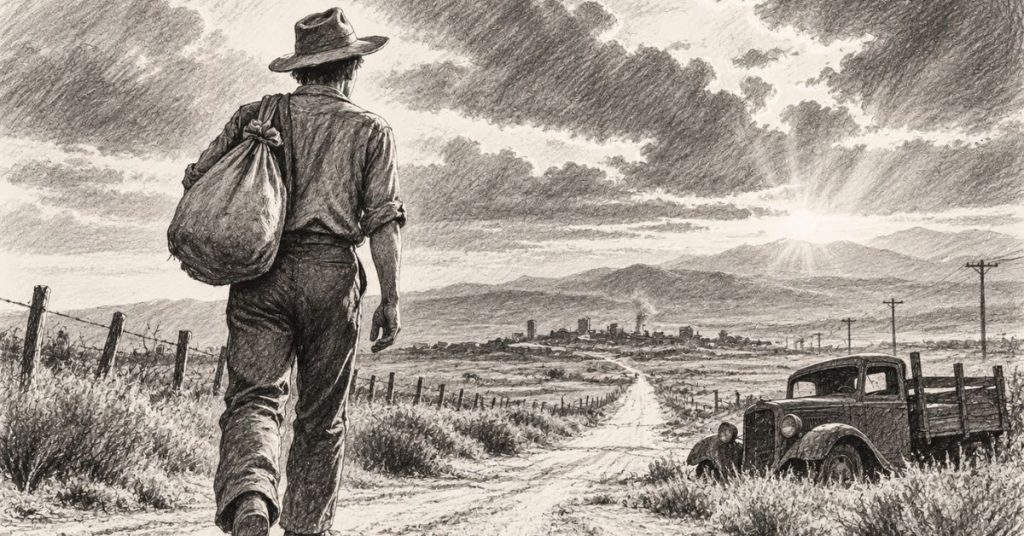
In 1939, John Steinbeck published The Grapes of Wrath, his novel about the Joad family, who leave Oklahoma for California during the Great Depression.

The family hopes to find work and a better life. Instead, they encounter exploitation, poverty and hostility.

Tom Joad, the novel’s central character, gradually becomes more than a young man trying to survive difficult circumstances. His experiences lead him toward a broader understanding of injustice and the struggles of people around him.

The following year, John Ford brought the novel to the screen, with Henry Fonda playing Tom. The film became one of the defining American dramas of its era.

The character also found his way into music.

In 1940, Woody Guthrie recorded “Tom Joad,” a lengthy folk ballad that retold the story from Steinbeck’s novel and Ford’s film. Guthrie was already developing the musical approach that would make him enormously influential: direct language, memorable melodies and stories about ordinary people whose lives rarely appeared in popular entertainment.

Decades later, that approach would profoundly influence Bruce Springsteen.

But Springsteen’s connection to Tom Joad had another beginning.

And it involved a television set.

The film Bruce Springsteen couldn’t identify

Springsteen’s longtime manager Jon Landau once recalled an evening when the singer told him about an extraordinary film he had stumbled across on late-night television.

Springsteen had not seen the beginning. He did not know its title. But the story had stayed with him.

As Springsteen described the film, Landau recognized it: John Ford’s The Grapes of Wrath.

The encounter deepened Springsteen’s interest in Steinbeck and the world he had depicted.

By then, Springsteen had already built a career writing about people struggling to make something of their lives. Songs such as “The River,” “Atlantic City” and “Johnny 99” explored economic hardship, desperation and the consequences of limited opportunity. His 1982 album Nebraska had shown how powerful those stories could be without the full E Street Band sound.

Recorded largely as home demos, Nebraska was stark, unsettling and deliberately spare.

Thirteen years later, Springsteen returned to that territory.

His 1995 album The Ghost of Tom Joad was largely acoustic. The title track brought Steinbeck’s character into a more contemporary American landscape, drawing connections between the hardships of the Depression and the experiences of people living on society’s margins.

This was not a cover of Guthrie’s 1940 song. Springsteen wrote a new composition, using the same literary character and drawing on a folk tradition Guthrie had helped define.

The result was a long way from “Born to Run” or “Dancing in the Dark.”

And it caught the attention of a guitarist who, at first glance, seemed like an unlikely admirer.

Tom Morello was listening

By the mid-1990s, Tom Morello was one of the most distinctive guitarists in rock.

With Rage Against the Machine, he had developed a sound that could be abrasive, explosive and almost impossible to identify as conventional guitar playing. Morello treated the instrument as something more than a source of chords and solos. He used effects, unconventional picking techniques and manipulation of the guitar’s controls to create sounds resembling turntables, sirens and electronic machinery.

Rage Against the Machine’s music combined heavy riffs with politically charged lyrics and an aggressive live performance style.

Springsteen’s acoustic The Ghost of Tom Joad seemed to belong to another world.

But Morello was listening closely. He admired Springsteen’s quieter recordings, particularly Nebraska and The Ghost of Tom Joad. In interviews during the 1990s, Morello discussed Springsteen’s connection to Woody Guthrie and the American folk tradition. He recognized something in Springsteen’s songwriting that connected with his own musical interests.

The two guitarists approached music differently, but both were interested in telling stories about people confronting powerful institutions and difficult circumstances.

Morello would eventually explore that tradition himself through his acoustic project, the Nightwatchman.

Before that, he had another idea.

What if Rage Against the Machine recorded “The Ghost of Tom Joad”?

The first transformation

In 1997, Rage Against the Machine released their interpretation of Springsteen’s song.

It was a dramatic departure from the original. Where Springsteen’s recording was quiet and reflective, Rage Against the Machine introduced heavy electric guitar, driving rhythms and Zack de la Rocha’s forceful vocals.

The underlying composition remained recognizable, but the atmosphere changed completely.

Morello later explained that he had suggested the song while the band was preparing material around the time of its tour with U2. The group developed its own arrangement, turning Springsteen’s acoustic narrative into a hard-edged rock recording.

The cover was released in November 1997 and later appeared again on Rage Against the Machine’s 2000 album Renegades, according to the band’s official history and contemporary coverage in Billboard and the Rage Against the Machine official biography.

This matters because the transformation from folk to heavy rock happened years before Morello ever performed the song with Springsteen.

For the moment, however, the two men were pursuing separate careers. Springsteen continued recording and touring. Rage Against the Machine became one of the defining alternative rock bands of its generation. Morello later formed Audioslave with Chris Cornell and former Rage Against the Machine bandmates.

Then, in 2008, the two worlds met.

The night two musical worlds collided

In April 2008, Bruce Springsteen and the E Street Band were performing at the Honda Center in Anaheim, California.

Morello had encountered Springsteen at a recording studio shortly beforehand. Springsteen suggested that they perform “The Ghost of Tom Joad” together.

For Morello, the invitation was extraordinary. He had been playing Springsteen’s song for years. Now he was being asked to perform it with the man who wrote it.

There was a complication, though. The arrangement Springsteen intended to use was in a different key from the version Morello knew. Morello would also be singing as well as playing guitar.

He later recalled being unusually nervous about the prospect of performing alongside one of his musical heroes.

On 7 April 2008, Morello joined Springsteen and the E Street Band onstage. They performed “The Ghost of Tom Joad.” Morello returned for another performance the following night.

What emerged was neither Springsteen’s original acoustic recording nor Rage Against the Machine’s heavy interpretation. It was something else.

Springsteen’s vocal delivery anchored the song. Morello brought the heavier arrangement and his distinct electric-guitar approach. The musicians exchanged vocals, and Morello’s guitar became an increasingly prominent part of the performance.

The collaboration had begun.

And it would not end in Anaheim.

The guitar solo that changed everything

There are guitar solos designed to demonstrate speed. Others are built around melody. Some become famous because a guitarist finds a handful of notes that seem impossible to improve upon.

Tom Morello’s solo on “The Ghost of Tom Joad” belongs to another category.

It is a dense, inventive passage of sounds, textures and techniques that pushes the song well beyond conventional rock guitar. Morello uses the instrument’s controls and electronic effects to produce abrupt changes in pitch, sustained notes, distorted textures and sounds that sometimes resemble machinery more than strings.

But the technical ingenuity is only part of its appeal.

In a 2014 interview with MusicRadar, Morello explained that he wanted the solo to express the emotions and struggles represented in the song. His intention was not simply to produce an impressive display of guitar technique. He wanted the instrument to communicate something that the lyrics had already established.

That helps explain why the solo works so effectively within the composition.

Springsteen’s original recording is restrained. Its power comes partly from what it withholds.

Morello’s guitar takes the opposite approach. It releases the tension.

The contrast is large, and when the two musicians perform together, the song moves from one emotional extreme to another. The audience hears Springsteen’s narrative before Morello’s guitar takes over.

The result is not merely a louder version of the original.

It is a different interpretation of the same material.

And it was about to acquire an Australian chapter.

The Australian connection

In 2013, Springsteen returned to Australia with the E Street Band.

Longtime guitarist Steven Van Zandt was unavailable for part of the tour because of his commitments to the television series Lilyhammer. Morello stepped in.

It was a significant opportunity for both musicians. Morello was no longer simply a guest guitarist appearing for one song. He was performing with one of rock’s most established touring bands, playing a substantial part of Springsteen’s catalogue.

The collaboration proved successful. Morello later recalled recording material with Springsteen in Sydney during this period. Those sessions contributed to Springsteen’s 2014 album High Hopes.

Morello played on eight tracks on the album, including a new recording of “The Ghost of Tom Joad.”

The song had now completed another transformation.

It began as a quiet Springsteen composition in 1995. Rage Against the Machine reinvented it in 1997. Springsteen and Morello combined their approaches onstage in 2008. And in 2014, the collaboration became an official Springsteen studio recording.

For Australian audiences who saw the 2013 tour, the partnership was more than a musical curiosity. They were witnessing a relationship that would become part of Springsteen’s recorded catalogue.

Two guitarists from different worlds

The collaboration becomes more interesting when you consider the musicians themselves.

Springsteen grew up in New Jersey, absorbing rock and roll, soul and the American folk tradition. His reputation was built on songwriting that combined vivid characters with stories about work, relationships, ambition and disappointment.

Morello grew up in Illinois and studied political science at Harvard before establishing himself as one of rock’s most unconventional guitarists. His playing with Rage Against the Machine challenged many assumptions about what an electric guitar was supposed to sound like.

Springsteen’s guitar work generally serves the song. Morello often makes the guitar sound like an entirely different instrument.

Yet both understood the emotional possibilities of the material.

There was also an interesting reversal in their relationship. Morello had taken Springsteen’s folk song into the world of heavy rock. But Springsteen’s acoustic music had also helped inspire Morello’s own work as the Nightwatchman. The influence was not flowing in just one direction.

Two musicians who approached similar subjects through radically different styles eventually found themselves performing together.

And the song that connected them was one neither had originally imagined as a duet.

A song with a history older than rock music

Return for a moment to Tom Joad.

Steinbeck created him in 1939. John Ford brought him to cinema audiences in 1940. Woody Guthrie turned his story into a folk ballad that same year. Springsteen revived the character in 1995, using him to explore contemporary experiences of poverty and displacement. Morello and Rage Against the Machine transformed Springsteen’s song into heavy rock in 1997. Then Morello and Springsteen began performing it together in 2008, eventually recording their collaboration for High Hopes in 2014.

Each stage changed the way the material was presented.

The underlying themes endured.

That is why Spielberg’s Desert Island Discs selections are such a satisfying connection. When he chose “The Ghost of Tom Joad” as one of his eight records, he was selecting a song that had travelled through literature, cinema, folk music and rock. When he chose The Grapes of Wrath as his book, he returned to the work that had started the journey.

The two choices were separated by decades of American cultural history.

Yet they belonged to the same story.

The performance worth watching

There are songs whose original recordings remain definitive.

And there are songs that acquire new lives when other musicians reinterpret them.

“The Ghost of Tom Joad” has done both.

Springsteen’s 1995 recording remains a powerful example of restrained storytelling. Rage Against the Machine showed how dramatically the song could change without losing its identity. But the Springsteen–Morello performances offer something especially unusual.

You can hear the musical histories of both men colliding.

Springsteen brings the narrative. Morello brings the sound world that has defined much of his career. Somewhere in the middle, a song written in the acoustic folk tradition becomes a large-scale rock performance.

There is something especially compelling about watching Morello take that solo. He is not a young guitarist trying to impress an established star. He is a musician who admired the original song, recorded his own version and eventually found himself standing alongside its composer.

The solo is memorable.

The story behind it makes it more so.

A fictional character from a 1939 novel. A folk singer in 1940. A young musician watching an unidentified film on late-night television. Another guitarist discovering an acoustic album decades later. A chance to perform together in California. And a musical partnership that eventually reached Australia.

All connected by one song.

If you have only heard Springsteen’s original recording, listen to the version with Tom Morello. And if you have only heard the rock version, go back to the quiet recording from 1995.

The difference between them is striking.

The journey connecting them is the real story.

How Queen Made Bohemian Rhapsody

By Jack Mercer – Rabbit Hole Fisherman

Six minutes, no chorus, and a record nobody quite knew what to do with:
How Queen made Bohemian Rhapsody

There are songs that sound unusual the first time you hear them. Then there is Bohemian Rhapsody, a song so unusual that after 50 years of weddings, stadiums, car stereos, films and drunken singalongs, we’ve somehow stopped noticing.

In This Story

Listen to it as though you’ve never heard it before. It runs for almost six minutes, there’s no conventional chorus, and a piano ballad gives way to an operatic section populated by massed voices before crashing into hard rock and retreating into a surprisingly quiet ending.

In 1975, Queen wanted this to be a single, and plenty of people had doubts. The remarkable part isn’t simply that Bohemian Rhapsody succeeded. It spent nine weeks at No. 1 in Britain and eventually became the UK’s biggest-selling single originally released during the 1970s.

The remarkable part is how four musicians and a producer managed to get something this complicated onto tape in the first place. There was no computer screen in front of them, and there wasn’t even enough tape.

Freddie Mercury already knew where he wanted to go

By 1975, Queen weren’t unknowns looking for their first break. Freddie Mercury, Brian May, Roger Taylor and John Deacon had released three albums. Sheer Heart Attack had been a substantial success, and Killer Queen had given them a major international hit.

But Bohemian Rhapsody was another proposition altogether. Producer Roy Thomas Baker had worked on Queen’s first three albums, and he later recalled Mercury playing him the new composition on piano before recording began. The song was already conceived in sections, but what nobody yet knew was quite how enormous one of those sections was going to become.

After about three weeks of rehearsal, recording began at Rockfield Studio in Wales on 24 August 1975. Work would eventually spread across another four studios, which is a reminder of just how difficult the band’s ambition was to contain.

Think about what Queen were attempting. Today, a musician constructing a six-minute recording from radically different sections can see the entire song laid out on a computer, with parts moved, copied, extended and layered almost without limit. Queen had 24-track analogue tape and scissors.

They actually left a hole in the song

This might be my favourite part of the whole story. Queen initially recorded Bohemian Rhapsody in pieces. The piano-led section was recorded conventionally enough, and the heavy rock section was treated almost like a separate song. But the operatic section in between wasn’t there yet.

So they left approximately 30 seconds of blank tape for it. Then Freddie Mercury kept having ideas. The opera got bigger, thirty seconds wasn’t enough, and Baker’s solution was wonderfully physical: they spliced more tape into the reel. And then more.

What we now regard as an inevitable part of one of the world’s most familiar songs was literally expanding because Mercury kept expanding the idea. Baker remembered the reel eventually becoming a patchwork as additional pieces were inserted, and the operatic section alone took about three weeks to record.

Baker pointed out the absurdity of that number: in 1975, three weeks was roughly the amount of studio time that might ordinarily have been spent making an entire album.

How did Queen create all those voices?

This is where the limitations of 1975 become part of the sound. Mercury, May and Taylor created the enormous vocal effect by repeatedly recording harmonies and combining — or “bouncing” — them onto fewer tracks, freeing space so that more vocals could be added. Then they did it again, and again.

Every bounce came with a price. Analogue copying introduced degradation and distortion, which is normally something an engineer tries to avoid. On Bohemian Rhapsody, it became part of what we’re hearing.

Baker described some vocal elements reaching multiple generations of copying before the various layers were finally combined. The master tape was subjected to so much work that transfers eventually had to be made to continue the process. There’s something wonderfully appropriate about this.

One of the most elaborate recordings of the 1970s wasn’t created because Queen had unlimited technology. Part of its character came from four musicians and their production team pushing limited technology until it did things it wasn’t particularly designed to do.

Nobody heard the complete song until it was assembled

Even that sounds strange now. Assistant engineer Gary Langan was 18 when he worked on the final mix at SARM Studios, and his job included assembling the multitrack master from the song’s three very different sections.

Until those pieces were physically put together, Langan recalled, nobody had really heard the whole six-minute composition as one continuous recording. Imagine that first playback: not the Bohemian Rhapsody we’ve all heard hundreds of times, but a new one, with no cultural baggage, no Wayne’s World, no Freddie Mercury biopic, no stadium full of people singing along, and no knowledge that millions of people would still be listening half a century later.

Just six peculiar minutes coming through the studio speakers. And then another problem presented itself: what on earth do you do with it?

Why wasn’t Bohemian Rhapsody shortened for radio?

A six-minute single in 1975 was a difficult proposition, and there were discussions about editing it. John Deacon later recalled that the band considered shortening the track and tried possibilities, but concluded that removing sections damaged the song. An edit eliminating major sections was prepared, but ultimately abandoned.

That decision now seems obvious. Of course you don’t cut Bohemian Rhapsody. But that’s because we know Bohemian Rhapsody. In 1975 they didn’t.

Official Charts notes that its 5 minute 55 second running time was intimidating for radio programmers and that people around the record doubted its prospects as a single. Then a radio DJ got hold of it.

Kenny Everett helped turn the problem into an event

Kenny Everett was one of Britain’s best-known radio personalities and a friend of Mercury’s. Before the single had officially been released, Everett obtained a copy, and played it. Then played it again.

Official Charts records that Everett managed to play the track 14 times over two days, helping create public demand before people could even readily buy the record. It’s difficult to imagine a better answer to the argument that a song is too long for radio.

Don’t shorten it. Play the entire ridiculous thing over and over until listeners start asking where they can get it.

Bohemian Rhapsody was released in Britain on 31 October 1975, and by the chart dated 29 November, Queen were at No. 1. They stayed there for nine weeks.

And then Queen had to work out how to promote it

There was another practical problem. Queen couldn’t simply appear on every television program and recreate the recording, because the operatic section alone depended upon studio layering that four people standing on a television stage couldn’t reproduce faithfully.

So Queen made a promotional film. Directed by Bruce Gowers, it cost about £4,000 according to Baker’s recollection and was produced quickly.

You’ll sometimes read that Bohemian Rhapsody invented the music video. That’s too neat. Promotional music films existed long before Queen made theirs. What Bohemian Rhapsody helped demonstrate was something slightly different and probably more important: a purpose-made film could allow a band to promote a record repeatedly on television without having to be physically present every time.

Queen’s clip became part of the record’s identity, and within a few years that idea would become standard music-industry machinery.

What is Bohemian Rhapsody actually about?

Here we need to resist another temptation. People have been trying to decode the song for decades. There are interpretations involving guilt, confession, identity and Mercury’s private life. Some are interesting, and some have been repeated so many times that speculation starts masquerading as established fact.

We don’t need to choose one. Mercury was perfectly capable of explaining himself when he wanted to, and Bohemian Rhapsody isn’t a song he definitively unpacked into one authorised meaning for everyone else.

For this story, that’s enough. Perhaps part of the song’s longevity comes from that ambiguity. Millions of people know the words, but that doesn’t mean millions of people agree about what they mean.

Then something extraordinary happened: it came back

Nine weeks at No. 1 would have been enough to put Bohemian Rhapsody into British music history. But the song acquired another life.

After Freddie Mercury died in November 1991, Bohemian Rhapsody was reissued and returned to No. 1 in Britain. Official Charts records the song reaching the top in both 1975 and 1991; it ultimately accumulated UK sales of more than 2.6 million and became the biggest-selling single originally released in the 1970s.

Then came Wayne’s World in 1992 and that car scene. Another generation discovered it, and the strange cycle continued. Something that sounded almost absurdly ambitious in 1975 gradually became so familiar that children born decades after Mercury died could recognise it within seconds.

Perhaps that’s the strangest part of all. Put aside the sales for a moment, forget the awards, and forget where it places on lists of the greatest songs ever recorded. Go back to the record itself.

Nearly six minutes. No conventional chorus. A ballad. An opera. A hard-rock section. An ending that doesn’t give you the enormous final chorus almost any modern producer would surely demand.

Three weeks spent just constructing the operatic middle. Lengths of analogue tape physically added because the section wouldn’t stop growing. Vocals copied and recopied because there weren’t enough tracks available. A single considered too long for conventional radio treatment.

It is an absolutely ridiculous recipe for a pop hit, and that’s perhaps why Bohemian Rhapsody still matters. Queen didn’t discover a clever formula and execute it perfectly. They made something for which there wasn’t really a formula.

Fifty years later, the most extraordinary thing is that it no longer sounds strange to us. We’ve heard it too many times.

Maybe tonight, put on Bohemian Rhapsody again. But this time, try to forget that you know what happens next.

How Did Blur Form and Become Famous? The Unlikely Story that Led to Girls & Boys and Parklife

By Jack Mercer – Rabbit Hole Fisherman

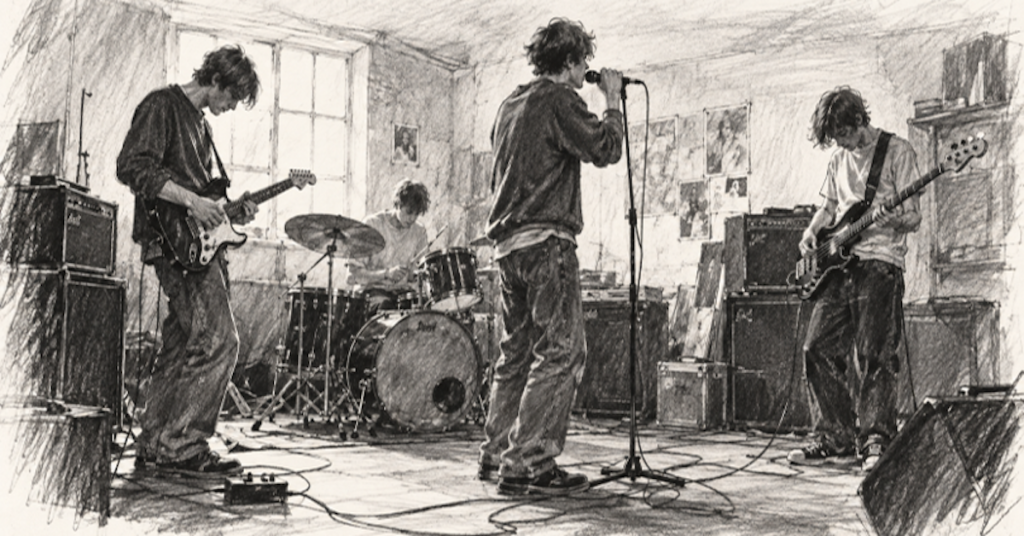
Blur didn’t begin with Parklife, Britpop or a battle with Oasis.

The four-piece came together in London in the late 1980s, initially playing as Seymour before signing to Food Records and becoming Blur. Their first album, Leisure, reached No. 7 in Britain in 1991 and produced the Top 10 single There’s No Other Way.

In This Story

It sounds like the beginning of a fairly conventional march towards stardom.

It wasn’t.

Within a year, Blur were struggling. Their next major single barely troubled the charts, musical fashion was moving quickly, their experiences touring America weren’t particularly happy and the band that would soon become synonymous with British music suddenly looked decidedly vulnerable.

Then they made Modern Life Is Rubbish.

For me, that’s where the Blur story really starts.

How did the members of Blur meet?

Long before anybody used the word Britpop, there were Damon Albarn and Graham Coxon.

The pair knew each other from school in Colchester, Essex. Their friendship would eventually become one of the defining relationships in Blur – musically brilliant, sometimes difficult and, as we’ll explore later in this series, remarkably durable.

By the late 1980s, London had brought the eventual line-up together.

Albarn was playing in a band called Circus, which was joined by drummer Dave Rowntree. Coxon became involved too, while studying at Goldsmiths, where he met bassist Alex James. When James joined, the four musicians who would become Blur were finally in place.

They called themselves Seymour.

Food Records became interested, but Seymour didn’t survive the record deal. The label wanted a different name. Blur was chosen, and one of the most recognisable names in British music was born.

At that point, of course, nobody knew that.

Blur’s first taste of success came quickly

The band’s first single as Blur, She’s So High, reached No. 48 in Britain in 1990.

Then came There’s No Other Way.

If you’re a Blur fan, put it on now and the ingredients are already there: Coxon’s guitar, Albarn’s voice, James’s bass and Rowntree driving the thing along. But it’s also unmistakably a record from a particular moment in British music.

Released in 1991, it reached No. 8 on the UK singles chart.

That was a proper hit.

Their debut album Leisure followed and reached No. 7.

For a young band, that’s an enviable start. But listening backwards through Blur’s catalogue now, Leisure can sound almost like a band trying on clothes before discovering which ones actually fit.

Blur themselves would move a long way from it.

And they would have to.

Then things started going wrong

The British music scene was changing at considerable speed.

American grunge had arrived. Nirvana’s Nevermind was released in 1991. What had seemed fashionable in British guitar music could suddenly sound yesterday’s news.

Blur’s 1992 single Popscene reached only No. 32.

That number matters, not because No. 32 is disastrous in isolation, but because of what Blur had just experienced. A band that had reached the Top 10 with There’s No Other Way suddenly had a new single disappearing rapidly down the chart.

And Blur were spending a lot of time on the road.

Their 1992 American touring has become an important part of Blur mythology, but there is enough testimony from people around the band to establish the broad picture without embellishing it: they weren’t particularly happy.

Journalist and Blur biographer Stuart Maconie later recalled a volatile band returning from the American tour while struggling with both their new record and disagreements about musical direction.

For Albarn, America also appears to have clarified something creatively.

He wanted Blur to sound more British – not British as a flag-waving exercise, but something more observant and peculiar than that.

England as it actually felt: suburbs, roads, Sunday afternoons, ordinary people, modernity sitting awkwardly alongside the past.

Ray Davies and The Kinks were an obvious reference point.

And suddenly Blur began sounding much more like Blur.

Why was Modern Life Is Rubbish so important?

Here’s the strange thing about Blur’s second album.

Commercially, it wasn’t the breakthrough.

Modern Life Is Rubbish reached only No. 15 on the UK albums chart when it was released in 1993. Its singles weren’t huge either: For Tomorrow and Chemical World both peaked at No. 28.

If you looked only at the numbers, you might conclude that Blur were going backwards.

Listen to the record and you hear something else: a band finding an identity.

For me, Modern Life Is Rubbish is the bridge between the Blur who made Leisure and the Blur who made Parklife.

It’s there in For Tomorrow. It’s there in Chemical World. It’s there in Sunday Sunday.

The observations become sharper. The Englishness becomes more pronounced. Coxon’s guitar sounds increasingly like Coxon rather than whatever guitar music happened to be fashionable at the time.

Producer Stephen Street was important to that transformation.

Street had previously produced There’s No Other Way. He later recalled unexpectedly meeting a dispirited Coxon while Blur’s attempts to record their second album with another producer weren’t working. Street encouraged him; shortly afterwards Albarn called, and Street became involved in the album.

It’s one of those tiny moments in music history that becomes fascinating only in hindsight.

Blur and Stephen Street subsequently made some of the band’s defining records together. But in 1993 there was no guarantee any of that was coming.

Were Blur struggling financially before Parklife?

Yes.

This is another part of the story that gets lost when we remember Blur as one of the giant British bands of the 1990s.

By this period, Blur had reportedly found themselves around £60,000 in debt. Graham Coxon, producer Stephen Street and Food Records co-founder Andy Ross have subsequently described just how little money the band had around the Modern Life Is Rubbish period.

That makes what happened next considerably more interesting.

Blur weren’t sitting comfortably after two massive albums deciding how to conquer the world with number three. They needed the next record to work.

Was Modern Life Is Rubbish successful?

Not in the way Parklife would be.

It peaked at No. 15 and spent 19 weeks in the UK Top 100.

But commercial success isn’t the only useful measure of an album’s importance.

Graham Coxon later described Modern Life Is Rubbish as Blur being “halfway to somewhere”.

That’s exactly how it sounds to me.

Blur had stopped chasing what was happening around them and started building their own world.

Then, in 1994, everything clicked.

Girls & Boys changed the equation

Before Parklife arrived, Blur released Girls & Boys.

It reached No. 5 in Britain – their biggest single yet.

Then came the album.

Parklife entered the UK albums chart at No. 1 in May 1994 and would spend 120 weeks in the Top 100, including 36 weeks in the Top 10.

The contrast with the previous album was extraordinary: Modern Life Is Rubbish had peaked at No. 15. Less than a year later, Parklife was No. 1.

The band hadn’t simply become more popular. Something happening around Blur had changed too.

Suede had emerged. Pulp were rising. Oasis were coming.

British guitar music was moving back towards the centre of popular culture, and Blur happened to arrive there with an album perfectly suited to the moment.

Soon somebody would give the whole thing a name.

Britpop.

Did Parklife make Blur famous?

Blur already had hits before Parklife, but the album transformed their scale of success.

It gave them a No. 1 album and produced Girls & Boys, To the End, Parklife and End of a Century. At the 1995 BRIT Awards, Blur won four awards.

They were no longer simply a successful alternative band. Blur had become one of Britain’s biggest bands.

And this is where knowing what came before makes the familiar story much more interesting.

It’s easy to draw a straight line backwards from Wembley Stadium and imagine Blur were always going to get there.

They weren’t.

There was a Top 10 hit, then disappointment. There were difficult tours, financial pressure and uncertainty over their musical direction. Their second album didn’t make the Top 10.

The record that helped Blur discover what they wanted to be wasn’t the record that made them enormous.

That came next.

And success created a completely different problem.

Because another British band was coming.

They were from Manchester.

They were fronted by two brothers called Gallagher.

And in August 1995, what should have been an argument between music fans somehow became national news.

NEXT: PART 2 — What really happened between Blur and Oasis?

Watch the documentary

This series was inspired by Blur: To The End, directed by Toby L., which follows Damon Albarn, Graham Coxon, Alex James and Dave Rowntree as Blur reunite to record The Ballad of Darren and prepare for their Wembley Stadium concerts.

Rather than retelling the film, Beyond the Documentary independently explores the people, history and events surrounding its story.

Blur: To The End is available on DocPlay in supported regions.