




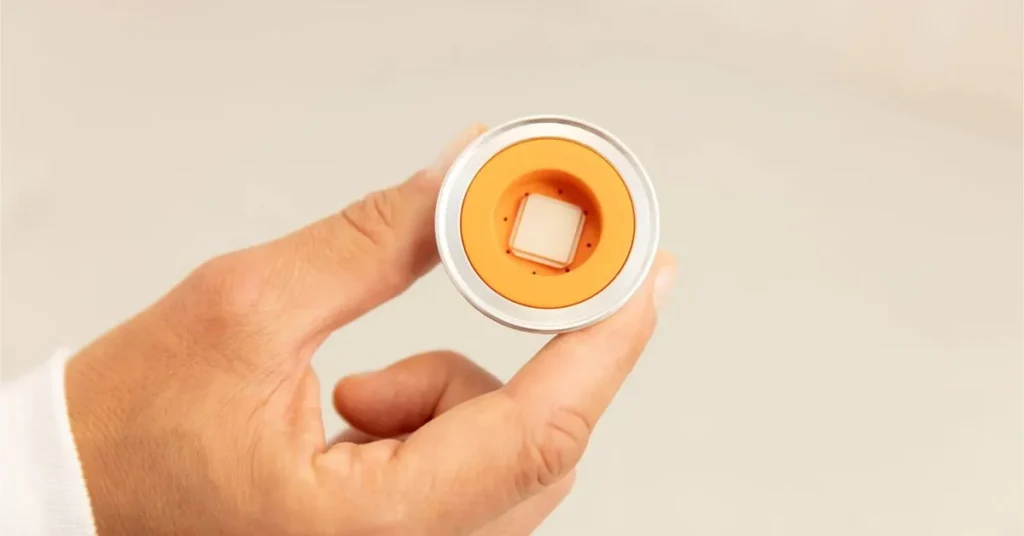
Hamilton-based clinical-stage biotech company Vaxxas has won a phase one tender from the European Health and Digital Executive Agency to advance its needle-free vaccine patch technology as part of the EU-backed global pandemic influenza preparedness programme.


The tender was awarded on behalf of the Health Emergency Preparedness and Response Authority under the EU 2024 EU4Health Work Programme, which allocates up to $250 million across three competitive sequential phases. The phase one allocation of approximately $22 million will fund a clinical study combining Vaxxas’ high-density microarray patch technology with South Korean company SK bioscience’s seasonal influenza vaccine. The Consortium also includes European-based IDT Biologika, a contract developer and manufacturer of vaccines, gene and immune therapeutics with more than 100 years of operating history. IDT Biologika led the Consortium submission.
What the HD-MAP Technology Does
Vaxxas’ HD-MAP is a small patch containing thousands of microprojections approximately 0.25 millimetres in length, fabricated by injection moulding. The patch delivers vaccine to the high-density populations of immune cells directly beneath the surface of the skin, with the microprojections triggering immune responses that rapidly traffic vaccine components to lymph nodes. The coated patch sits inside a single-use applicator and administers the vaccine in a matter of seconds.
The technology carries several practical advantages over traditional needle-and-syringe delivery. The dried form of the vaccine is more stable at higher temperatures than vaccines in liquid formulations, and HD-MAPs have proven safe and tolerable in hundreds of trial participants, inducing equal or greater immune responses to injected vaccines at lower doses. The platform also has the potential to eliminate end-to-end refrigeration requirements, reducing the cold-chain logistics burden that slows vaccination rates in both routine and emergency settings. The core technology was originally developed at the University of Queensland, and Vaxxas was established to commercialise it.


What Phase One Will Deliver
The phase one programme has two parallel workstreams. The first is a clinical study advancing Vaxxas’ HD-MAP technology in conjunction with SK bioscience’s seasonal influenza vaccine. The second is a pre-clinical development programme producing a clinic-ready HD-MAP for a pre-pandemic influenza vaccine.

All clinical products for phase one will be manufactured using Vaxxas’ proprietary sterile automated manufacturing lines at its Hamilton biomedical facility. Vaxxas is simultaneously completing a separate and largest-to-date phase one clinical study of its HD-MAP with a pre-pandemic influenza vaccine, supported by the US Government’s Biomedical Advanced Research and Development Authority.
The Consortium Partners
IDT Biologika, which led the Consortium submission, brings more than a century of vaccine development and manufacturing experience to the programme. SK bioscience, a South Korean vaccine company with a longstanding collaboration with Vaxxas, will supply vaccine antigens for both the seasonal and pandemic influenza studies across the programme.
Vaxxas chief executive David Peacock said the tender reflected a shared ambition across the Consortium and the European Union to invest in alternative vaccine technologies, and that the recognition of HD-MAP by governments worldwide confirmed its role as a component of future public health preparedness.


What Comes Next
If the Consortium successfully completes phase one, it becomes eligible to tender for subsequent phases covering late-stage clinical trials, application for marketing authorisation in Europe, and the establishment of a sovereign EU manufacturing capability.
Further information about Vaxxas and its HD-MAP technology is available at vaxxas.com. The company’s Hamilton biomedical facility is located at 240 MacArthur Avenue, Hamilton QLD 4007, within the Northshore Hamilton river precinct.
Published 3-March-2026.