




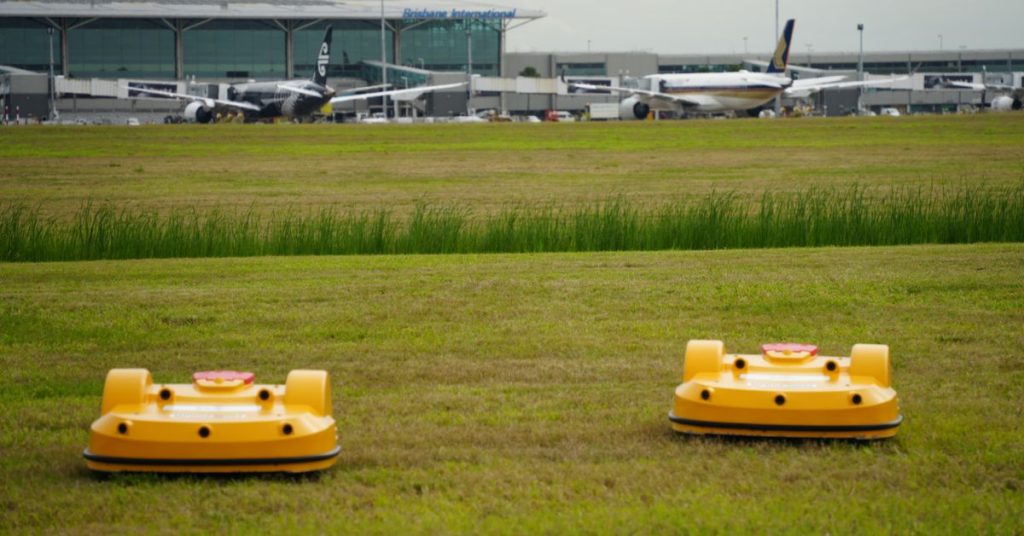
Brisbane Airport has become the first major airport in Australia to trial a fleet of autonomous robot mowers, deploying four machines across its 919-hectare airside precinct in a move that will save more than 60,000 litres of diesel fuel every year.


The robot mowers, now operating on the airfield adjacent to the Hamilton and Eagle Farm precinct, run day and night on a mix of solar energy and the airport’s renewables-backed electrical network. They maintain grassed areas continuously rather than in scheduled bursts, a fundamental shift in how airside vegetation management is handled at one of the country’s busiest aviation hubs.
For Brisbane Airport, which processes more than 23 million passenger movements per year and sits across a land footprint equivalent to 54 South Bank Parklands, keeping the grass cut is not a cosmetic concern. It is a safety requirement.
Overgrown grass attracts wildlife, and wildlife on or near runways is one of the most persistent hazards in civil aviation. The robot fleet addresses that risk around the clock, significantly reducing the amount of time staff need to spend working in active airside zones.

The machines and how they stay in bounds
Each robot mower operates within a defined zone maintained by a combination of onboard sensors, geofencing and a physical barrier. The system keeps the machines away from active runways and taxiways, and they navigate autonomously without manual intervention once deployed. If something unexpected enters their path, they stop or redirect.

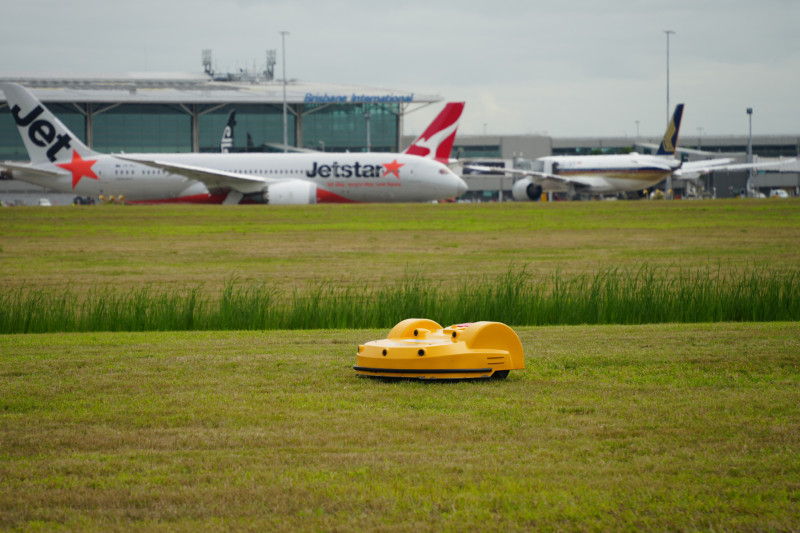
The continuous mowing cycle produces a secondary benefit that is less obvious but genuinely useful. Because the grass is cut little and often rather than in periodic heavy passes, the process selectively encourages healthier grass species to establish and allows the airport to reduce its use of herbicides across the airfield. The result, in the airport’s own assessment, is greener and more resilient grass than conventional mowing produces.
“These robot mowers might be small, but their impact is significant,” said Brisbane Airport CEO Gert-Jan de Graaff. “Unlike conventional mowing, which must be scheduled around air traffic and staff availability, these robotic mowers can operate day and night. This reduces disruption to flights and the need for manual mowing, helping to maintain our airfield while keeping safety front and centre.”
Part of a longer sustainability journey
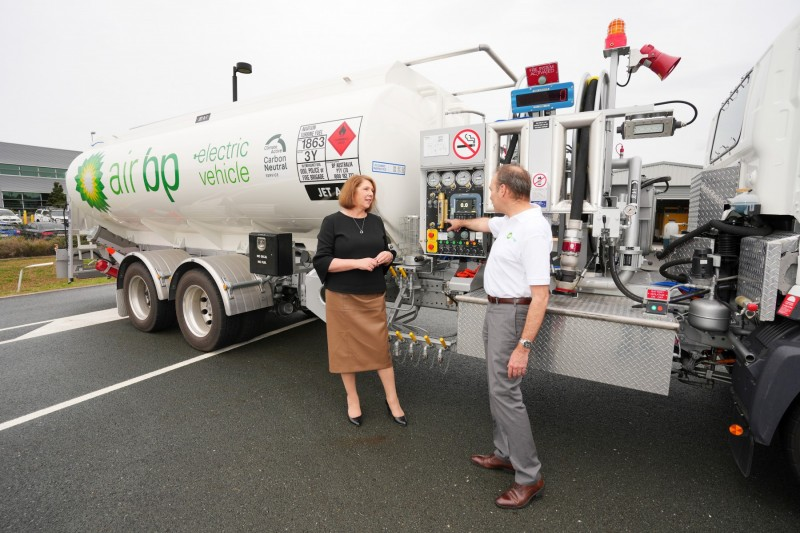
The robot mower trial is the latest in a series of technology-driven sustainability initiatives at Brisbane Airport stretching back several years. The airport deployed Australia’s first all-electric aircraft refueller through Air BP in 2022 and introduced Oscar, an AI-powered smart recycling assistant, into its terminals the same year.



In 2023, it became the first Australian airport to achieve Airport Carbon Accreditation Level 4: Transformation, the highest level of the globally recognised accreditation programme. It also accelerated its Net Zero target by 25 years, committing to reach net zero scope 1 and 2 emissions by 2025.
Brisbane Airport Head of Sustainability Jess Rudd said the autonomous mowers align directly with that longer-term commitment. The 60,000-plus litres of diesel saved annually represent a meaningful reduction in operational emissions from ground maintenance alone, replacing fuel-heavy machinery that has historically run for long hours across the airfield.
“Our innovation programme is about trialling and scaling technology that delivers real results,” said Oscar Maan, Brisbane Airport’s Innovation Lead. “These autonomous mowers show how that approach is already making a difference on the ground.”
What comes next
The current pilot covers a growing portion of the airside land area, with the fleet expected to expand into additional zones over time. How quickly that expansion happens will depend on the programme’s ongoing performance assessments, but the airport has signalled clearly that scaling the technology is the intention rather than keeping it confined to a trial footprint.
Brisbane Airport sits within the City of Moreton Bay and Brisbane City boundary near Hamilton, Pinkenba and Eagle Farm, and its operations connect the region to more than 50 domestic and international destinations.
Further information on Brisbane Airport’s sustainability programme is available here.
Published 26-June-2026